

IEA Says Middle East Conflict Worse Than 1970s Energy Crisis, Russia-Ukraine War

…says the world was losing 11 million barrels of oil and 140 billion cubic metres (bcm) of gas per day from the Iran war.
…publishes new report to ease oil price pressures on consumers.
By Ndubuisi Micheal Obineme
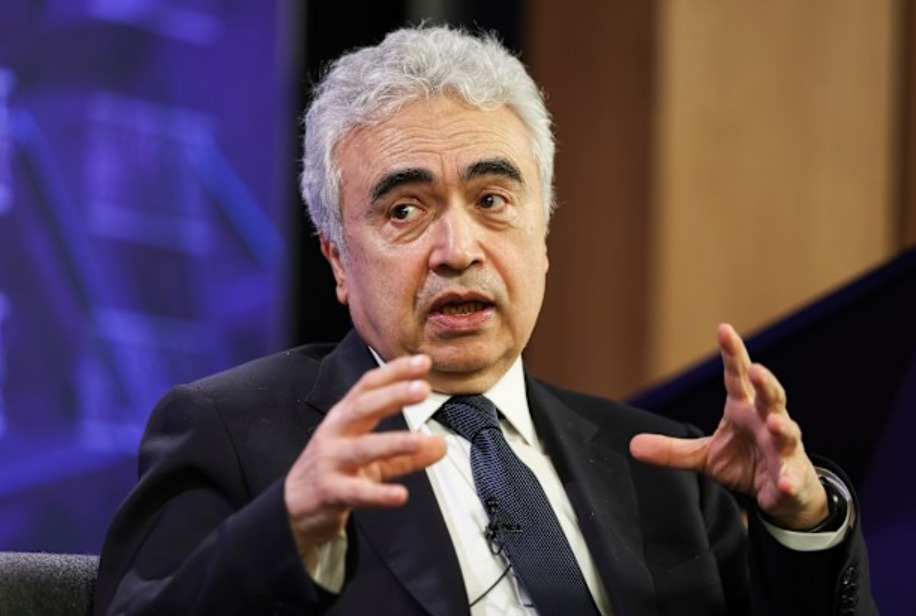
As the Middle East conflict enters its fourth week, Executive Director of the International Energy Agency (IEA), Fatih Birol, says the Middle East conflict is worse than the energy crisis in the 1970s and the energy crisis caused by the Russian invasion of Ukraine.
In a statement obtained by The Energy Republic, the IEA boss outline the extraordinary consequences of the ongoing Iran War on global energy supplies, noting that Asia is at the forefront of the energy crisis.
“I see that there is a growing problem in Asia, immediate problem in Asian countries, and this issue, especially in the context of products, diesel and jet fuel, we will feel it more and more in Europe and beyond.”
In addition, Birol said the world was losing 11 million barrels of oil a day, compared to 5 million during the two oil shocks in the 1970s, and 140 billion cubic metres (bcm) of gas a day compared to the 75 bcm a day lost during the initial part of the 2022 Russia-Ukraine war.
“At that time, in each oil crisis, the world has lost about 5 million barrels per day, both of them together 10 million barrels per day. And after that we all know that there were major economic problems around the world. And today we lost 11 million barrels – so more than two major oil shocks put together,” he said. “Plus after Russia’s invasion of Ukraine, the gas markets – especially in Europe – we lost about 75 billion consumer metres. And as of now, as a result of this crisis, we lost about 140BCM, almost twice.
“The situation is, if we want to put in a context, this crisis as it stands now is two oil crises and one gas crash put all together.”
He warned that oil and energy were not the only vital supplies being disrupted, saying that there were interruptions to items such as fertilizers and helium.
“I think the challenge we are facing is a global challenge. I think no country will be immune to the effects of this crisis if it continues to go in this direction. So there is a need for global efforts around the world.”
On March 11, 2026, the IEA released 400 million barrels of oil from its strategic reserves to ease some of the pressure on the supply side.
Birol added that the agency would make a decision on releasing further oil following consultations with member countries.
Notably, the IEA has released a series of recommendations, outlining 10 measures that would ease the burden of the global oil price spike on consumers, including working from home and driving at slower speeds.
IEA’s recommendations to reduce the impacts on global energy disruptions:
1. Work from home where possible
Displaces oil use from commuting, particularly where jobs are suitable for remote work.
2. Reduce highway speed limits by at least 10 km/h
Lower speeds reduce fuel use for passenger cars, vans and trucks.
3. Encourage public transport
A shift from private cars to buses and trains can quickly reduce oil demand.
4. Alternate private car access to roads in large cities on different days
Number-plate rotation schemes can reduce congestion and fuel-intensive driving.
5. Increase car sharing and adopt efficient driving practices
Higher car occupancy and eco-driving can lower fuel consumption quickly.
6. Efficient driving for road commercial vehicles and delivery of goods
Better driving practices, vehicle maintenance and load optimisation can cut diesel use.
7. Divert LPG use from transport
Shifting bi-fuel and converted vehicles from LPG to gasoline can preserve LPG for cooking and other essential needs.
8. Avoid air travel where alternative options exist
Reducing business flights can quickly ease pressure on jet fuel markets.
9. Where possible, switch to other modern cooking solutions
Encouraging electric cooking and other modern options can reduce reliance on LPG.
10. Leverage flexibility with petrochemical feedstocks and implement short-term efficiency and maintenance measures
Industry can help free up LPG for essential uses while reducing oil consumption through quick operational improvements.