
UptimeAI Showcases AI Reasoning Agents for Critical Gas Infrastructures

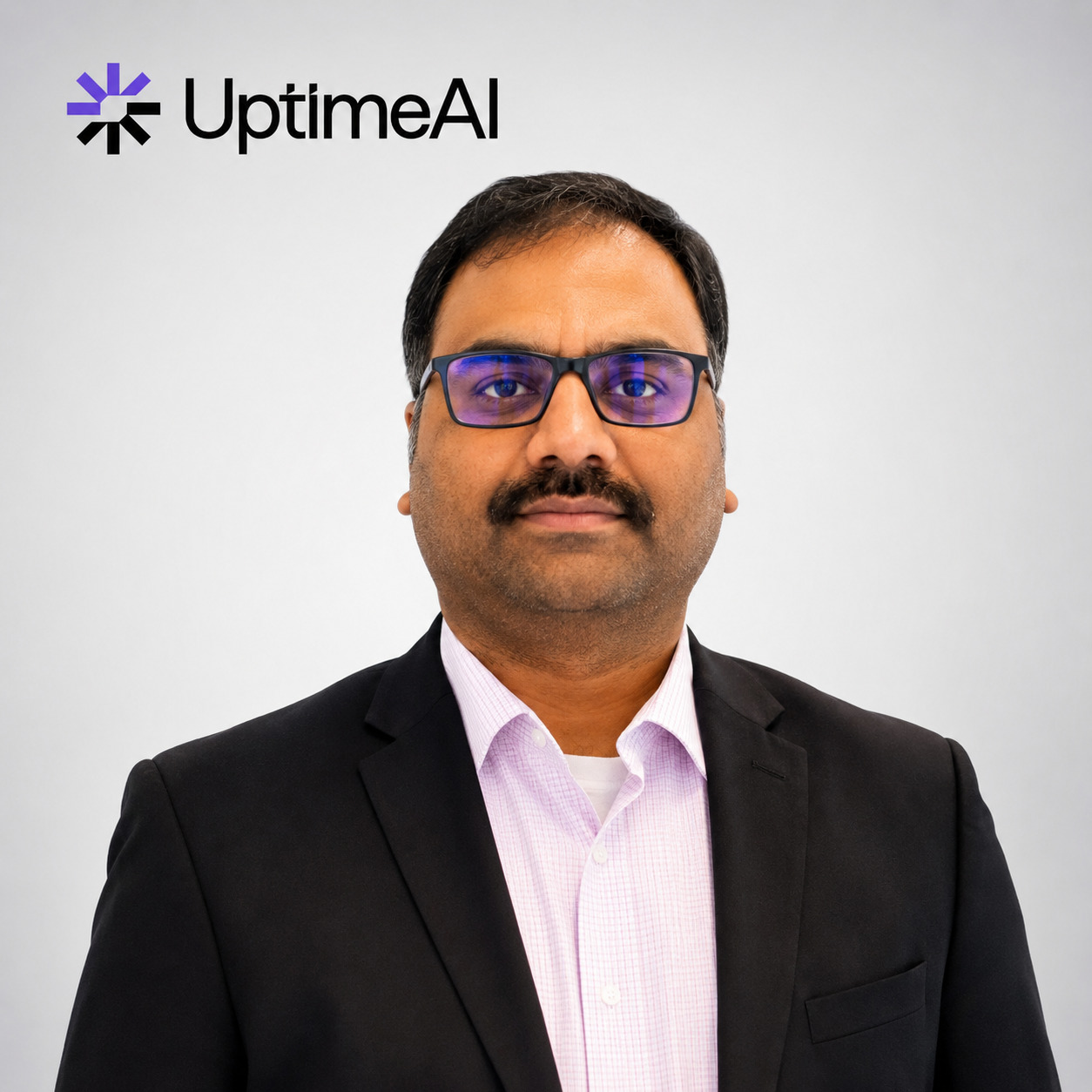
By Ndubuisi Micheal Obineme
…Kishore highlights the transformational potential of AI-driven operational intelligence.
As the global gas sector faces increasing pressure to improve reliability, reduce emissions, and optimize operational efficiency, UptimeAI is advancing the next generation of industrial intelligence through its AI Reasoning Agents platform.
In an interview with The Energy Republic, Krishna Kishore, Senior Director – Solutions & Value Delivery at UptimeAI, outlined how the company’s AI-powered operational intelligence platform is reshaping critical gas infrastructure management by moving beyond traditional predictive analytics into proactive engineering decision support.
“Legacy systems can detect anomalies, but they stop short of helping operators understand why something is happening or what action should be taken,” said Krishna Kishore. “UptimeAI’s Reasoning Agents bridge that gap by acting like a 24/7 virtual engineer—continuously diagnosing root causes, recommending corrective actions, and learning from operational outcomes.”
Moving Beyond Detection to Intelligent Decision Support
Unlike conventional condition monitoring systems that rely heavily on static thresholds and reactive maintenance workflows, UptimeAI’s Reasoning Agents continuously evaluate the operational environment across compressors, pipelines, gas processing plants, and reinjection systems.
According to Kishore, the platform uses adaptive baseline models that account for seasonal changes, operational load variations, and post-maintenance conditions, significantly reducing false alarms and enabling earlier and more accurate diagnostics.
He notes that the AI platform synthesizes data from multiple operational sources, maintenance management systems (CMMS), inspection records, shift logs, P&IDs, and OEM documentation. By contextualizing equipment behavior against more than 1,000 asset-specific failure modes and historical plant performance, the system delivers actionable recommendations before failures escalate.
In one of its deployment, Kishore revealed that UptimeAI successfully helped prevent a $1.5 million compressor trip by identifying the root cause of an unexplained temperature increase in a reinjection compressor thrust bearing—demonstrating the value of full-system operational reasoning over isolated asset monitoring.
Strengthening Methane Emissions Prevention and Compliance
Methane management remains one of the industry’s most pressing operational and environmental challenges. UptimeAI’s AI Reasoning Agents integrate prevention, detection, monitoring, and reporting into a continuous intelligence-driven framework.
Kishore said that AI platform identifies early-stage equipment degradation—such as compressor seal wear, pressure instability, or abnormal vibration patterns—before methane leaks occur. AI-based soft sensors also estimate emissions behavior where physical sensors are limited, enabling continuous monitoring across critical assets.
In addition, UptimeAI’s HAZOP Analysis Agent digitizes P&IDs, automatically generates process nodes, and continuously evaluates operational deviations using engineering standards, incident history, and operating procedures. This transforms traditionally static HAZOP studies into dynamic operational risk intelligence.
“AI is helping the industry shift from periodic inspection-based emissions management toward continuous operational intelligence,” he explained. “Operators gain visibility into the small percentage of assets and conditions responsible for disproportionately high emissions, enabling more targeted interventions and better capital allocation.”
Seamless Integration Across Existing Gas Infrastructure
Recognizing the complexity of industrial environments, UptimeAI designed its platform to integrate directly with existing infrastructure without requiring major hardware replacement or disruptive system overhauls. The platform connects to both structured and unstructured operational data sources, creating a unified digital knowledge graph spanning assets, facilities, and process systems.
In one of its deployment, a strict OT cybersecurity policies prevented direct cloud connectivity from the customer’s system. However, UptimeAI addressed the challenge through a secure bridge-server architecture that enabled governed OPC-based data transfer into a local aggregation layer before secure cloud transmission—maintaining full OT segregation while enabling scalable AI reasoning capabilities.
“Cybersecurity alignment is built into the platform architecture from the beginning,” he revealed. “Our deployment model supports secure cloud and hybrid environments while aligning with enterprise IT and OT governance requirements.”
He added that the AI framework aligns with global compliance initiatives, including OGMP 2.0, EU methane regulations, ESG reporting requirements, and LNG export standards.