

France gaz outlines a lower-cost pathway for French energy transition

By Ndubuisi Micheal Obineme
…A new report released by France gaz highlights the role of renewable and low-carbon gases, energy efficiency and a diversified energy mix in delivering a more affordable and secure transition.
Key figures from the France gaz report:
- €330–€460 billion: potential reduction in the overall cost of France’s energy transition
- More than 50%: share of potential savings achievable before 2035
- 221–278 TWh: projected French gas demand in 2050
- 27–42%: potential reduction in gas consumption by 2050
- 20 TWh → 14 TWh: projected decline in liquid gas consumption by 2050
PARIS — France can achieve carbon neutrality by 2050 while reducing the overall cost of its energy transition by €330 billion to €460 billion, according to a new report released by France gaz.
The report titled “Perspectives gaz 2050” reveals that combining energy efficiency, electrification, renewable and low-carbon gases, hybrid technologies and resilient infrastructure can enable France to cut emissions while limiting investment requirements for households, businesses and public authorities.
More than half of the potential savings could be achieved before 2035, underlining the importance of investment decisions made during the next decade.
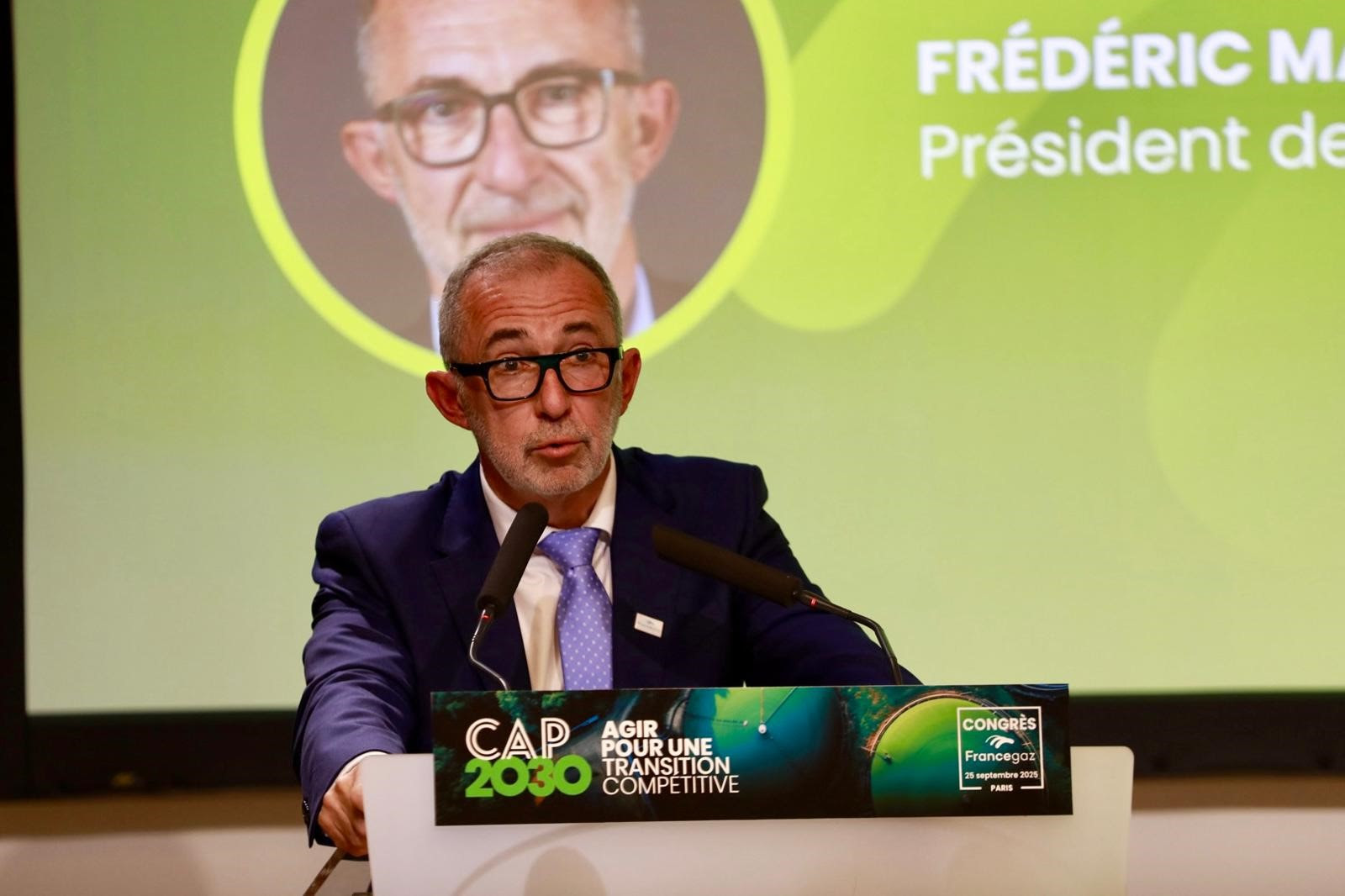
Speaking at a press conference in Paris, covered by The Energy Republic, Frédéric Martin, President of France gaz said, “Maintaining a diversified energy mix, greening end-uses, and fostering technological innovation represent an opportunity for our country’s energy sovereignty. Renewable gases are also a key driver of value creation in local regions, enabling a decarbonization policy that entails a reasonable level of effort for industries and households alike.”
Natural gas consumption to fall between 27–42% by 2050
The study examines two pathways to carbon neutrality: one centred on domestic renewable-gas production and local circular economies, and another based on greater industrial renewal and international trade.
Despite their differences, both scenarios point to the same conclusion: France can decarbonize while maintaining energy security, flexibility and affordability by combining complementary technologies rather than relying on a single energy source.
Natural gas consumption in France is gradually declining and is projected to reach between 221 and 278 TWh in 2050, a decrease of between 27–42% in French energy mix.
Furthermore, the largest reductions are also expected in buildings and industry, driven by energy efficiency, optimized equipment, changing climate conditions and the wider deployment of hybrid technologies.
Targeted use of renewable gases
While overall natural gas consumption declines, renewable and low-carbon gases are expected to play a targeted role in sectors where they can deliver significant environmental and economic value.
In particular, bio-CNG, bio-LNG and e-methane are expected to contribute increasingly to the decarbonization of road and maritime transport.
Liquid gas consumption is also projected to decline from approximately 20 TWh to 14 TWh by 2050.
France gaz’s analysis also highlights the potential of France’s domestic biomass resources, noting that expanding biomethane production, developing technologies to convert non-methanizable waste into gas and deploying bio-LPG for dispersed and rural uses will strengthen domestic energy production and reduce reliance on imports.
Investment choices will determine the cost of the transition.
The study identifies three areas where targeted investment can help reduce the cost of decarbonization:
Efficient and hybrid equipment — matching technologies to the technical needs and financial constraints of households and businesses.
Building renovation — pursuing an ambitious but realistic renovation trajectory that reflects the diversity of France’s buildings and households.
Energy infrastructure — maintaining stable gas infrastructure capacity while progressively integrating hydrogen infrastructure from 2029 to strengthen system resilience.
According to France gaz, this approach can help France achieve its climate objectives without imposing unnecessary additional investment costs on households, businesses and public authorities.
Decarbonization and energy sovereignty
The Perspectives gaz 2050 study argues that the energy transition can simultaneously support decarbonization, energy sovereignty and regional economic development.
By developing domestic renewable gases and making use of local biomass and waste resources, France can reduce its dependence on imported energy while creating economic value within its regions.
The study ultimately calls for a pragmatic and technology-driven approach to carbon neutrality — one that uses each energy source where it provides the greatest environmental and economic benefit.