
Gas Investment Forum: Shell Nigeria Gas outlines four pillars to build Nigeria’s gas economy

…says building investors’ confidence, demand-linked infrastructure and execution are key to accelerating the country’s gas ambitions.
By Ndubuisi Micheal Obineme
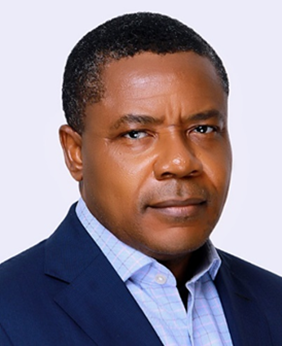
As Nigeria advances its Decade of Gas agenda, the Managing Director of Shell Nigeria Gas (SNG), Ralph Gbobo, has called for a stronger approach to unlock Nigeria’s gas potential, outlining four pillars to drive the country’s decade of gas ambition to the next level of development.
SNG’s Managing Director, represented by Chidiebere Okocha – Head Corporate Relations, made the call in his keynote address at the Gas Investment Forum 2026, held from September 29 to 30 under the theme, “Positioning Nigeria as Africa’s Global Gas Powerhouse.”
He noted that gas is an energy source for industrial feedstock, energy security, and a catalyst for economic diversification and Nigeria’s long-term competitiveness.
“Resources in the ground do not, by themselves, create economic value,” Gbobo said. “Value is created when gas reaches a factory, powers a productive enterprise, supports manufacturing, enables new investment, creates jobs and improves the competitiveness of Nigerian businesses.”
With Nigeria now in the second half of its Decade of Gas ambition, he said Nigeria must move beyond its vast natural gas reserves and focus on converting the resource into investment, infrastructure, industrial growth and jobs.
He outlined four priority areas to turn Nigeria’s gas ambition into measurable success stories.
The first is an investment environment built on confidence. Gbobo said gas infrastructure demands significant capital and long-term commitment, and that investors need clear and consistent regulation, commercially viable frameworks, transparent processes and predictable timelines. Policy ambition, he said, must translate into conditions that let credible projects secure funding, reach final investment decisions and proceed to execution.
“The world is competing for capital,” he noted. “Nigeria must therefore present investors with more than potential. We must present investable projects, credible partners, predictable rules and functioning markets.”
The second is expanding infrastructure with demand in mind. He called for pipelines, distribution networks and processing facilities to be tied to real and sustainable markets, including industrial clusters, manufacturing centres and power projects.
“Supply without bankable demand will not deliver sustainable investment,” he said, while demand without reliable infrastructure will constrain growth.
The third is making execution the defining priority. “Nigeria does not need more declarations of potential,” Gbobo said. “It needs more projects delivered safely, efficiently and sustainably.”
He called for credible project development, early stakeholder engagement, effective regulatory coordination and commercially sound agreements.
The fourth is treating collaboration as a practical operating model. Gbobo said no single institution can build Nigeria’s gas future alone, outlining roles for government (policy direction), regulators (certainty and oversight), producers, infrastructure companies, financiers, technology partners and customers. Collaboration, he said, must go beyond dialogue to shorten decision-making, resolve constraints and speed up delivery.
He urged forum participants to be “ambitious, but also practical,” by identifying strategic projects that can be accelerated, addressing barriers to investment, building workable commercial frameworks and connecting more industries to gas.
“What is required now is the collective will to execute,” Gbobo reiterated, expressing confidence that Nigeria can build the infrastructure, markets and investor confidence needed to earn the title of Africa’s global gas powerhouse.
Shell footprint in Nigeria’s gas sector
Drawing on Shell experience in Nigeria, Gbobo said Shell Nigeria Gas currently supports industries across Ogun, Lagos, Rivers and Abia States and surrounding areas, and is pursuing opportunities to reach new markets.
“Our objective is not merely to extend pipelines,” he said. “It is to bring reliable gas closer to businesses, support industrial productivity and help create the conditions in which customers can invest and grow with confidence.”
He reaffirmed the company’s commitment to investing in gas infrastructure, expanding access to reliable energy and developing industrial markets in partnership with government, regulators and customers.
Shell Nigeria Gas received the Integrated Company of the Year Award at the Gas Investment Forum 2026. The award was received on behalf of the Managing Director, SNG by Noredia Douglas-Jombo – Media and Communications Adviser, SNG.