

At the 30th United Nations Climate Change Conference (COP30), African Development Bank (AfDB), development partners call for major new financing to accelerate Africa’s Great Green Wall initiative


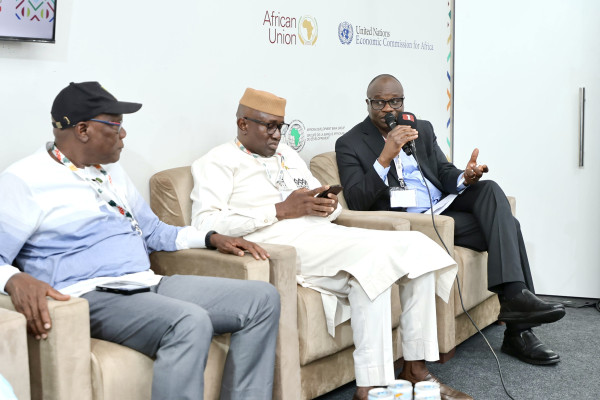
At the 30th United Nations Climate Change Conference (COP30) in Belém, Brazil, development partners including the African Development Bank (www.AfDB.org), urged for a scale up in financing to deliver the Great Green Wall’s 2030 targets.
Currently funded by contributions from Member States and development partners, this African Union initiative aims to restore 100 million hectares of degraded land, sequester 250 million tonnes of carbon and create 10 million jobs in 11 countries in the Sahel region, stretching from Senegal in the west to Djibouti in the east of the continent.
“Despite the support of many countries and institutions, including multilateral development banks such as the African Development Bank and the World Bank, we are still far from meeting the financing needs of the Great Green Wall,” said Ibrahim Sow, special advisor to the Senegalese president on environmental issues.
Sow moderated a session during the climate conference titled ‘Scaling up finance for the Great Green Wall: from climate ambition to integrated action for Land, Nature and People’. The session was organised by the Pan-African Agency for the Great Green Wall, the African Development Bank Group and the World Food Programme, as a forum to discuss strategies for mobilising large-scale financing, including private and innovative resources. The Pan-African Agency for the Great Green Wall, based in Nouakchott, is the implementing body for the Great Green Wall Initiative.
In January 2021, €19 billion in contributions were announced for the Great Green Wall during a round table organised in Paris alongside the One Planet Summit on biodiversity. The African Development Bank, a leading partner in the initiative, indicated that it would contribute approximately $6.5 billion through its ongoing programmes.
“Fifteen years after its launch, the Great Green Wall is moving from vision to implementation. Millions of hectares have been restored, and thousands of green jobs have been created, but significant gaps in financing and capacity remain. To achieve its goals by 2030, enhanced collaboration between African governments, development partners and the private sector is essential,” argued Mr Garba, a former Minister of the Environment for Niger.
Sékou Koné, technical advisor to the Malian Ministry of the Environment, representing its minister, believed that political will, the development of a legal framework to protect investments in the Great Green Wall area and an attractive economic environment would encourage other partners and the private sector to invest. “Our countries must position themselves to access new funds. One example is the Tropical Forest Forever Facility (TFFF), which has just been launched by the Brazilian presidency of COP 30, to which 74 countries have said they will sign up,” he said, echoing support for South-South cooperation.
Participants stressed the importance of strengthening institutional capacities, human resources and the very structure of the agency, to ensure it has all the resources it needs to operate effectively.
Al-Hamndou Dorsouma, the African Development Bank’s manager for Climate and Green Growth, affirmed the institution’s very strong’ support for the Great Green Wall.
“In addition to attracting concessional public resources, the Agency should develop a pipeline of bankable projects in land restoration and climate change adaptation, with a view to mobilising new and innovative financing, including blended finance, carbon markets, green bonds and climate funds, in order to bridge the Great Green Wall’s financing gap,” Doursouma said.
He cited as an example the Climate Action Window created as part of the 16th replenishment of the African Development Fund (ADF-16) in 2023, which mobilised more than $450 million, enabling it to support 41 projects worth $322 million in its first year of operation, with beneficiaries including countries in the Great Green Wall. He called for enhanced coordination and synergy of action among the partners of the initiative to avoid duplication of actions.
Participants in the session emphasised the need for close involvement of local communities and local authorities, as well as strengthening national structures to enable them to access climate finance directly.
Distributed by APO Group on behalf of African Development Bank Group (AfDB).