


The Caribbean’s energy ambitions received a major financial boost this March as Afreximbank confirmed it is increasing its CARICOM financing capacity to $5 billion, marking a significant step toward closing the region’s infrastructure and development funding gap.
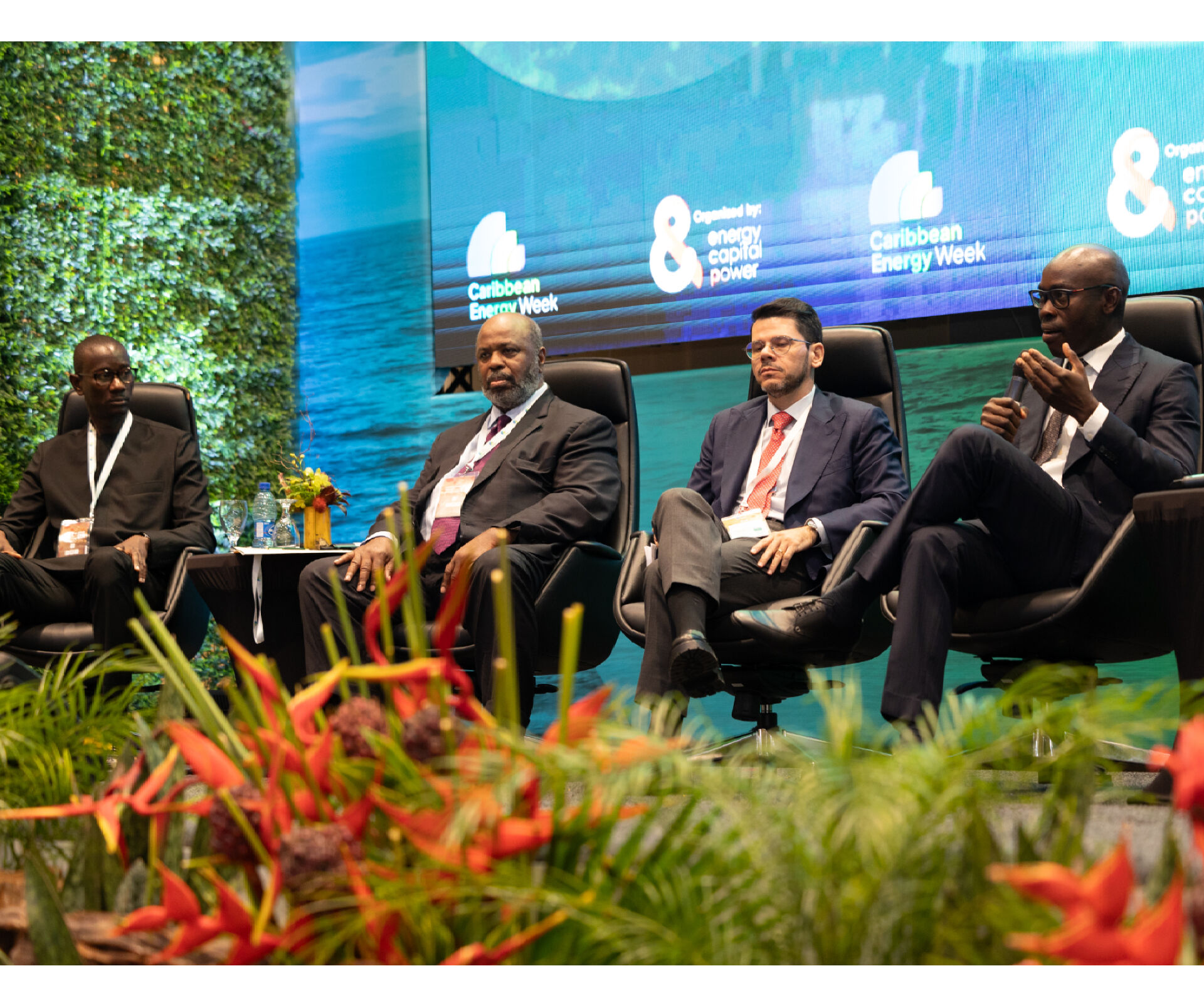
Speaking during the Atlantic Basin Business Forum at Caribbean Energy Week (CEW) 2026, Okechukwu Ihejirika, Acting CEO for the Caribbean Office at Afreximbank, emphasized that access to capital remains the single most important factor in turning the region’s energy ambitions into reality.
“There is a lot of financing that is required in the region and no one single institution can cover that alone. With CARICOM Afreximbank, we see the establishment of a large institution that can finance projects across the region,” Ihejirika said.
Launched in 2023, CARICOM Afreximbank will scale its regional financing limit from $3 billion to $5 billion over the next four years. Ihejirika explained that the entity already has buy-in from CAPRICOM states, and that “we have commissioned advisory agencies that are working on developing the framework document. We are waiting on feedback from the advisors. Once that comes in, we will be ready to throw in funds.”
Scaling Caribbean Energy: Finance and Infrastructure in Focus
The expansion of Afreximbank’s CARICOM financing commitment signals a shift toward more locally anchored financing structures, capable of supporting energy, infrastructure and industrial projects across the Caribbean. It coincides with an accelerated push by Caribbean authorities to address infrastructure challenges, targeting strengthened logistics and regional ties.
Wandenberg Pitaluga Filho, President of the Amapá Economic Development Agency, outlined how Brazil’s Amapá state is focusing on infrastructure, regulatory reform and workforce development to position itself as a logistics and industrial hub linked to the Guyana Plateau and Caribbean energy developments.
“We are focused on three pillars: infrastructure, regulation and workforce development,” Filho said, noting that projects such as the expansion of Santana port and new gas infrastructure will be critical to supporting future oil and gas developments across the region.
Local Content Takes Center Stage
Beyond financing and infrastructure, local content has emerged as a strategic priority for many Caribbean states, with speakers at CEW emphasizing that resource development must translate into domestic economic growth. Jude Kearney, Partner at ASAFO&CO., stressed that local content policies are not simply regulatory tools but foundational components of a functioning hydrocarbon industry.
“Local content is not just a throwaway concept. It has turned out to be an incredibly important component of a working hydrocarbon industry,” Kearney said, pointing to countries such as Nigeria and Equatorial Guinea as examples of how strong but flexible local content frameworks can support both investors and domestic industry development.
From an African perspective, Ababacar Mbengue, Director of Promotion and Exploration at Petrosen E&P, outlined how Senegal has approached local content by benchmarking global markets and implementing legislation across the entire oil and gas value chain. He stated that “Petrosen is not only educating investors but supporting them from a technical side to do seismic work and exploration until they can develop [projects].”
The message from both sides of the Atlantic was clear: local content frameworks must be structured, predictable and aligned with industry realities if they are to attract investment while building domestic capacity.
Cross-Atlantic Cooperation Gains Momentum
Cross-Atlantic cooperation between Africa and the Caribbean is also gaining momentum, particularly as new gas producers and emerging oil provinces look to share technical expertise, financing models and regulatory experience.
Delivering a keynote ahead of the discussion, Ibrahima Noba, Director of E&P, Ministry of Energy, Senegal, highlighted that “What we see between Africa and the Caribbean is a resurgence. Both face similar challenges and share a common vision. This creates a unique opportunity for aligned strategies. We believe the time has come for collaboration between NOCs, shared development of gas monetization strategies and stronger collaboration across the energy value chain.”
Distributed by APO Group on behalf of Energy Capital&Power.