
“Greenland Holds 13 Billion Barrels Proven Oil Reserves, With Genetic Link to North Sea” – Robert Price, President, March GL Company

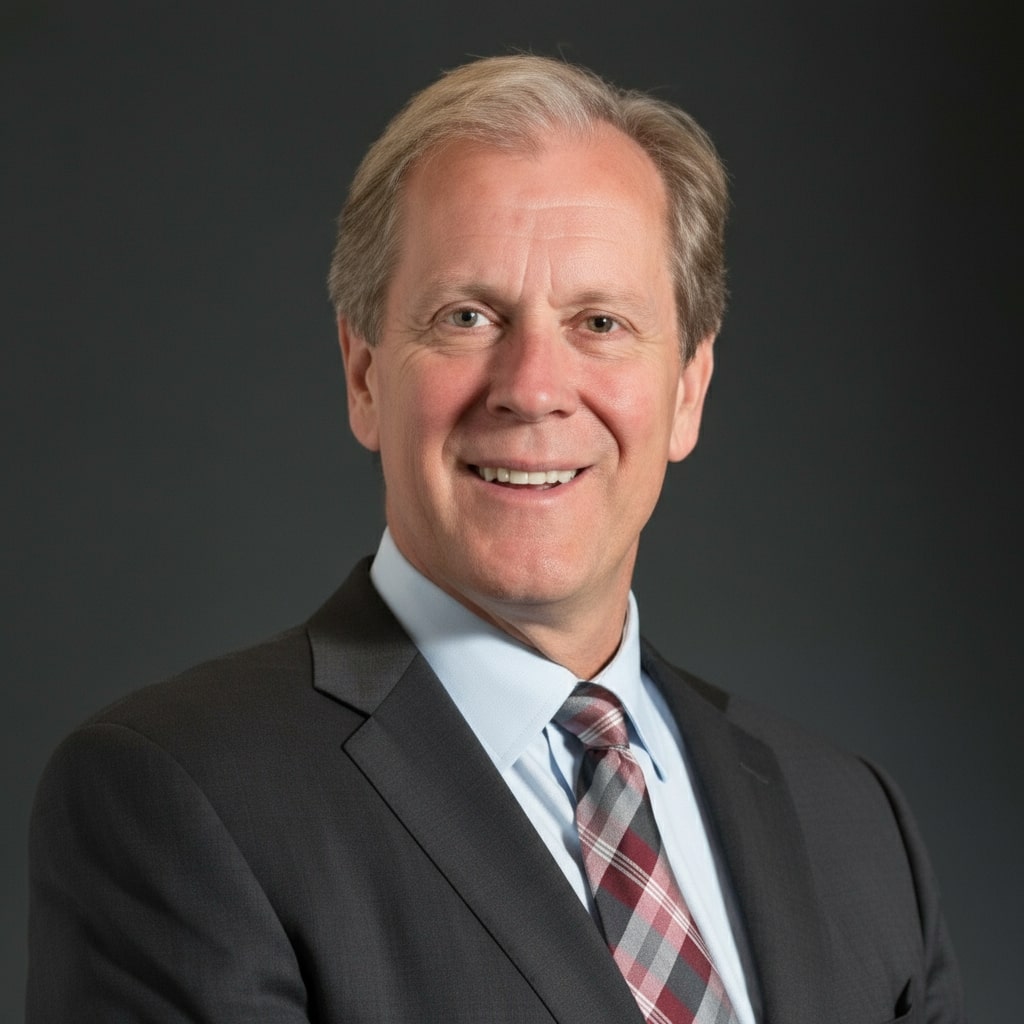
In this interview, Robert Price, President, March GL Company, talks to Ndubuisi Micheal Obineme, Managing Editor of The Energy Republic, about Greenland’s untapped oil and gas reserves and its potential to become a strategic positioning for the Island, providing Western nations, including the United States, with an alternative energy supply, reducing dependence on foreign rivals amid rising geopolitical tensions.
“Greenland wants independence to be able to support themselves.” Robert stated, stressing that the people of Greenland doesn’t want to be part of Denmark and United States.
In his words, Robert also provided insights about how his company, March GL Company, is stepping in to unlock Greenland’s Jameson basin through a Merger Agreement with Greenland Exploration Limited and Pelican Acquisition Corporation “PELI” to bring Greenland’s oil and gas into Western energy markets.
According to him, the company’s basin seismic data show that there could be up to 13 billion barrels of proven oil reserves that have a genetic link to the North Sea, positioning Greenland as a prominent source to strengthen Western energy security, stabilize supply chains, and ensure reliable access to the resources needed to power both today’s economy and the global energy transition.
Excerpts:
TER: How would you evaluate Greenland’s oil and gas potential as a prominent source for energy security, particularly in the Western region?
Robert: I have drilled four wells in Colorado, Oklahoma, Kansas, and North Dakota, coupled with other international activities in my career journey in the oil and gas industry. I drilled these wells in millions of barrels. I haven’t drilled any wells for billions of barrels in my career. That’s what Greenland is all about.
Our exploration license in Greenland is the Jameson Land Basin.
We have hired an engineering firm that carried out an independent report last month. The data shows that there could be up to 13 billion barrels of oil within the seismic lines; these did not include the deeper horizon in the basin. This is just half of the basin.
Our first well has proven reserves of over 2.9 billion barrels of oil.
There are oil seeps at the surface that have a genetic link to the North Sea.
I feel very fortunate that our company will be merged into Greenland Energy Company (Pelican) . Pelican will be renamed as Greenland Energy Company.
We are going to drill in five different formations on just the first well. There is a high probability of success.
We have purchased all the equipment to build the roads, which includes a D9 bulldozer, excavators, trucks, and housing for people. There’s a housing camp for workers, desalination units, generators, etc. All the equipment has been positioned around our Jameson basin. We will start building the roads by mid-2026.
We have contracted with a drilling contractor, including Halliburton Energy Services, to become our oil field service provider and logistics.
Again, the project is well advanced with a high probability of success.
We will start drilling two wells in 2026. If successful, it could be a major influence, not only on the United States’ energy security but also on European energy security.
Our peak production can be over 1.5 million to over 2 million barrels of oil per day, which could be exported to the European market.
TER: How integrated is the Environmental, Social, and Governance Strategy and Implementation Process? In what ways will the ESG plan impact Greenland’s sustainability industry and its communities?
Robert: We are working very closely with the Greenland regulators in terms of how we permit the project, respect the land, and the animals, and the sea life.
We’re timing our first part of drilling through migratory bird seasons to make sure that we don’t have any impact on the wildlife.
Greenland is beautiful, from the icebergs to the mountains, the flowing rivers, and the beautiful tundra. It’s a beautiful country. The people are wonderful.
Greenland wants independence. They don’t want to be part of Denmark. They don’t want to be part of the United States. They want to be able to support themselves.
We will start drilling our wells in 2026, which are all onshore development.
Our oil production will make a significant impact on the people of Greenland, not only on the United States’ energy security, but also on European energy security.
TER: What role will Pelican play in the post-acquisition integration plan?
Robert: Absolutely none. We’re merging as Greenland Energy Company under a NASDAQ Special Purpose Acquisition Companies (SPACs).
Pelican will go away, and Greenland Energy Company will emerge after the merger.
We will use this vehicle as a funding mechanism. We are using over $70 million to drill our first two wells through the NASDAQ US stock exchange.
I will be the CEO, and then my colleague Larry Swets will be the executive chairman. We’ve already picked up incredible board members with great experience from the United States.
TER: What’s your advice on the strategic partnership the United States can develop with Greenland in maintaining the island’s territorial integrity?
Robert: The United States and Greenland have a rich history. In fact, my father served in World War II in Greenland. He was posted at different remote weather stations.
He wrote letters to my grandmother. I have over 50 copies of his letters. Every one of his letters had a stamp on the outside, known as the US Army examiner. It was the United States that came to Greenland to protect it during World War II.
The US and Greenland have a long history, and it’s a positive history. We respect the people, land, and their sea life.
We will develop this large-scale oil discovery to the benefit of all Greenlanders. I believe that the people of Greenland deserve to know that they have one of the largest oil accumulations in the world.
TER: What do you think the United States, Denmark, and the European Union can do to bring Greenland’s natural resources, including oil and gas, into the Western market?
Robert: Well, I think it’s up to Greenland. They have control over their destiny.
They’re the ones who granted us the license to drill the wells. They’re the ones that grant other companies the ability to explore their natural resources. So, it’s Greenland that decides to attract investments from elsewhere.
Our company, March GL Company, is a Texas-based company. Our investment is coming strictly out of the United States of America to benefit Greenland and its people.
TER: What is Pelican’s new investment focus in the coming years?
Robert: We’re focused on investing in these first two wells. The first well is $40 million, and the second well is over $20 million. We will use proceeds from our first public stock offering to drill the first wells.
After we develop the two wells, we will evaluate the additional capital needed, which may include major oil and gas companies to develop the other field.
TER: Beyond oil and gas, what is your company doing in renewable energy?
Robert: In my previous businesses, we developed a 250-megawatt power plant that was burning primarily on coal in New Mexico.
However, instead of using coal, we decided to use natural gas with plans to process natural gas into hydrogen. We also planned to use the hydrogen to generate electricity and then sequester the CO2.
There is also solar power here. But some wildfires occurred in the western part of the United States. What happens to those solar panels? They got choked out and can’t produce electricity with the smoke in the air.
Also, there was a big freeze in Texas four years ago. Texas has wind power. What happened to those turbines? They froze, and electricity couldn’t be delivered to the people. Some people even died.
So, what we did with our 250-megawatt power plant is provide a dispatchable, on-demand electricity that can be turned into the grid.
I owned a 75% stake in the company. I sold it to a company named Tall Grass. Tall Grass is one of the largest midstream companies in the United States, owned by Blackstone, which is known as the largest private equity firm in the world.
They are now going through the final permitting process to make that investment a reality.
I am going to bring all my experience, not only in oil and gas exploration, but also in doing what we can to be responsible for the environment and make sure that our Jameson basin produces oil responsibly in Greenland.
TER: How would this project contribute to the Greenland workforce?
Robert: This is a new industry for Greenland. We will train people to work. We’re excited to be working with the people of Greenland in the project.
TER: What is your message to the people of Greenland?
Robert: We want to work together to see if they have one of the largest oil fields in the world.