

Political Stability, Regulatory Frameworks to Drive Long-term Investment for Hydrogen Projects in Europe – Anthony Mazzenga

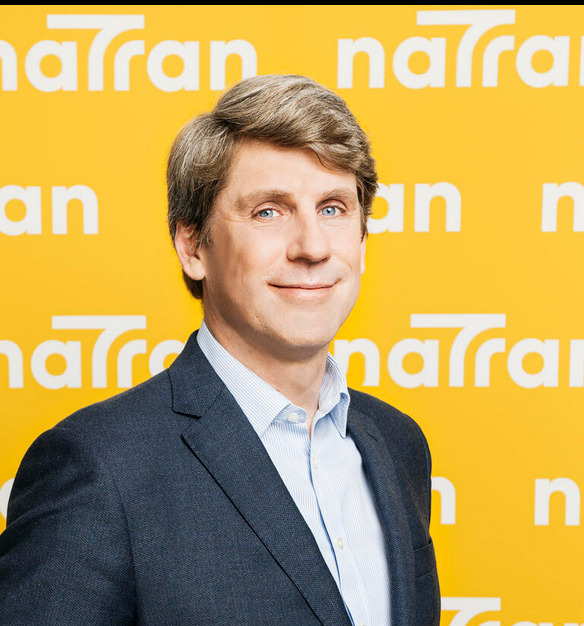
In this interview with The Energy Republic, Anthony Mazzenga, Development Director, NaTran, discusses the challenges, market opportunities, and outlook on the European hydrogen industry, with a spotlight on the H2med project – Europe’s first major green hydrogen corridor, connecting France, Germany, Spain, and Portugal.
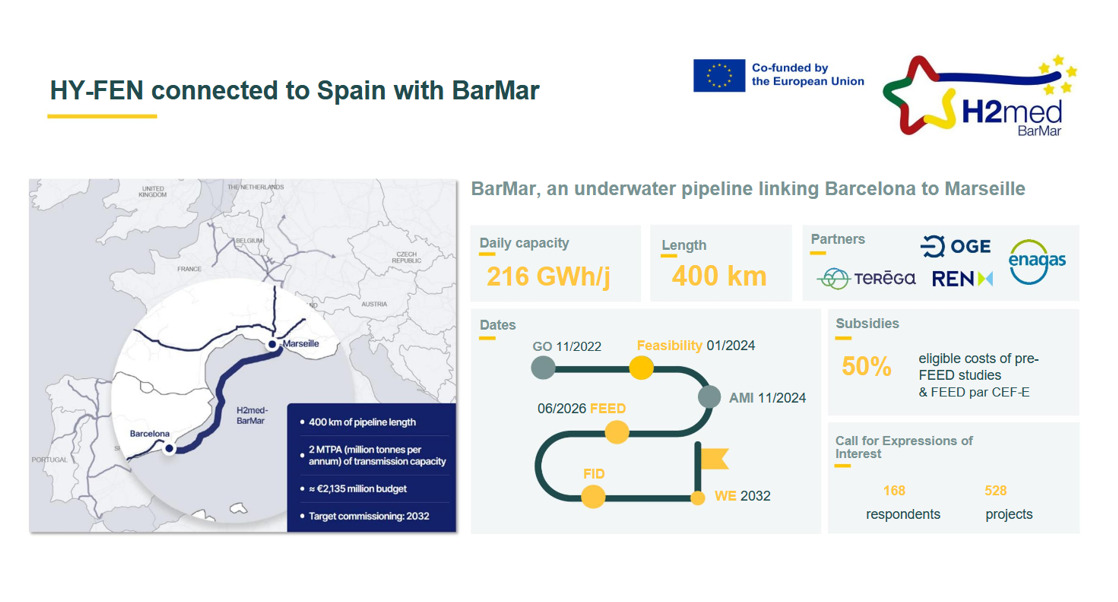
The H2med project is a transnational initiative to interconnect the hydrogen networks of the Iberian Peninsula to Northwest Europe, enabling Europe to be supplied with affordable green hydrogen by 2032. Excerpts:
Interview by Ndubuisi Micheal Obineme
TER: NaTran is part of the H2med project alliance, Europe’s first major green hydrogen corridor. What’s your assessment of the challenges and market opportunities for developing such an infrastructure project?
NaTran: There are two main challenges. The first one is the market. We need commitments from customers to enable us to make investments and develop our hydrogen infrastructures.
All the partners of the H2med project are actively engaging with market players to draw their attention and commitment to this kind of hydrogen infrastructure project.
For example, we launched H2med Alliance last year to promote the project to customers.
The second challenge is a regulation. We need the regulatory framework to enable us to make long-term investments.
We also need stability in terms of decarbonization policy. Some of the frameworks are already set by the European Directive 2024. But it needs to be transposed into national laws.
We need long-term planning and a public guarantee to give the first pioneers customers an acceptable tariff.
TER: How would you evaluate the demand for hydrogen in Europe?
NaTran: Yes, we have some customers who need hydrogen. But some sectors are in crisis, such as mobility. The mobility sector is facing huge challenges, and some industry players have decided to stop their hydrogen projects in the mobility sector.
At NaTran, we forecast that industrial customers will drive growth for hydrogen demand, while other industries, such as refineries, the steel industry, and the chemical industry, represent a significant demand for hydrogen in the future.
TER: Which specific reforms are needed from the European Union to scale up hydrogen projects?
NaTran: We need political stability and strong commitments on Europe’s climate target. As industry players, we also need a stable framework to enable us to promote our hydrogen project to customers, including sovereignty for local production and consumption of hydrogen in the critical industries.
Our H2med project is for the interest of the domestic market in different countries, and it requires funding. The project promotes an integrated European market.
The European Commission needs to fund the project. It has been done in the past for electricity and gas markets. We’re sure that they will continue to fund the promotion of the internal market of the hydrogen sector in Europe.
The European Union’s “Connecting Europe Facility” is funding our projects in the study phase. But we will require funding for the construction part of our project in due time.
TER: How will the H2med project impact the French energy mix?
NaTran: It will provide a huge capacity of interconnection of 2 million tons of hydrogen per year, which is more or less 80 terawatt hours of hydrogen transit connecting France’s industrial hub, H2 production plants, and H2 storage sites. The major infrastructure will bring flexibility to the grid as electrolysis can offer an output to excess electricity production and therefore reduce nuclear power plants’ modulation. The flexibility enabled by a project such as H2Med can generate up to 1.5 billion cost efficiencies/year by 2050, according to the RTE and NaTran joint study.
The H2med project will be part of our energy mix in the future.
Hydrogen is key to reaching carbon neutrality in sectors where electrification is not possible. It is complementary to all other means of decarbonization, such as CCUS or biomethane.
NaTran is also developing projects around the transportation of CO2 in order to support industries in implementing CCS for their non-abatable CO2 emissions.
TER: Which industries will drive growth for hydrogen development in Europe?
NaTran: At the moment, refineries, fertilizers, chemistry, and steel industries are the three main sectors that are obviously pulling the whole market for hydrogen development.
TER: What’s your outlook for the European hydrogen industry?
NaTran: We see hydrogen developing on these pioneering sectors, once the infrastructure and market are available, with Europe’s sovereignty in terms of energy supply reinforcing the momentum we see emerging.
Other renewable energies will also support the industrial and mobility sectors.
TER: What’s your company’s main priorities in 2026?
NaTran: Our main priority in 2026 is to continue our engineering and technical studies for our projects, which will enable us to make final investment decision by 2030.
We will engage with the public through dialogue because our projects must get public acceptance to get the permit to build the project.