

The the Standards for Official Statistics on Climate – Health Interactions (SOSCHI) Conference Calls for Stronger Climate–Health Indicators to Guide Policy and Protect Communities


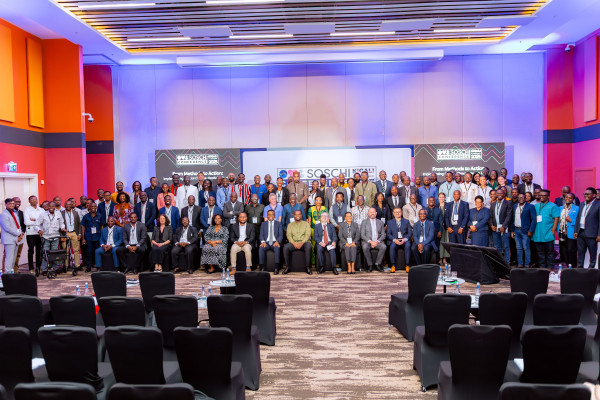
A Conference bringing together African government officials, scientific institutions, development partners and global organisations from 23 countries, issued a clear call to strengthen climate–health intelligence. It emphasised that countries will remain vulnerable to climate hazards unless they build and sustain systems that measure how climate change affects human health. The call followed three days of dialogue and technical exchange at the Standards for Official Statistics on Climate – Health Interactions (SOSCHI) Conference held in Kigali from 3 to 5 December 2025.
Climate change is already driving severe health impacts across Africa, yet most countries collect data in those fields in isolation. To effectively quantify risk of climate change impacts on health and protect vulnerable populations, comparable indicators are needed to guide preparedness, shape policy, or allocate resources for adaptation.
The joint communiqué adopted in Kigali emphasises that enhancing climate–health intelligence will strengthen existing national strategies and unlock new possibilities for targeted interventions, resilience building and the development of early warning. It highlights the “urgent need for more robust information on the health impacts of climate hazards to strengthen national policies and to guide target interventions.”
Delegates agreed that robust climate–health interactions indicators are essential to move from reactive responses to proactive, evidence-based planning. They emphasised that data alone is insufficient: decision-makers require harmonised indicators that reveal where climate hazards are affecting health, how disease patterns are shifting, and where adaptation efforts will have the greatest effect. Participants therefore committed to embedding the SOSCHI indicators into national statistical systems, with particular focus on extreme weather, water-related disease, vector-borne disease and mental health.
A major theme across the discussions was sustainability. Participants highlighted that climate–health interaction monitoring cannot depend on short-term projects, but must be rooted in long-term domestic financing, skilled personnel and systems that persist across political and funding cycles. Strengthening civil registration and vital statistics systems, improving the timeliness of health data, and enhancing environmental and meteorological monitoring were identified as critical foundations for sustainable climate–health intelligence. Collaborative data sharing and system interoperability were also deemed essential, given that climate–health indicators rely on multi-sectoral datasets that are rarely analysed together.
Technical demonstrations from Rwanda, Ghana and the UK showed how the SOSCHI indicators reveal emerging vulnerabilities and shifting disease burdens. Rwanda’s results illustrated spatial changes in malaria risk linked to temperature and rainfall patterns, while Ghana’s results highlighted how diarrhoeal disease, air pollution and heat-related mortality can be quantified and tracked over time. These findings underscore the value of harmonised methods for informing policy and supporting adaptation planning.
Participants left Kigali with a shared commitment to advance the scaling and institutionalisation of the SOSCHI framework. The communiqué invites national statistical offices, health ministries, research institutions and funders to join this effort, noting that together they can “deliver validated climate-health metrics that inform policy, strengthen resilience, and safeguard population health in the face of climate change.”
The Kigali meeting affirmed that Africa is not only experiencing the most immediate impacts of climate change but is also shaping the global standards required for effective climate–health action. The collective commitment expressed by participants represents a significant step towards building the climate–health intelligence necessary for a safer and more resilient future.
Distributed by APO Group on behalf of African Institute for Mathematical Sciences – Research and Innovation Centre.
Media contact:
Joseph Ndiritu
Programs delivery and reporting
AIMS Research and Innovation Centre
Email: jndiritu@aimsric.org
Phone: +250 780 440 935
About the SOSCHI Partnership:
Standards for Official Statistics on Climate – Health Interactions (SOSCHI) is a collaboration between the UK’s Office for National Statistics, the African Institute for Mathematical Sciences Research and Innovation Centre (AIMS-RIC) in Rwanda, and the Regional Institute for Population Studies (RIPS) at the University of Ghana, supported by global partners and funded by Wellcome Trust. The project provides a harmonised statistical framework and open-source platform enabling countries to generate actionable climate– health indicators.