

“United States to Start Rare Earth Processing in Next Five Years” – Harvey Kaye

Across the world, countries that have critical mineral deposits are scrambling to process these minerals for economic development and to capitalize on export market opportunities. Critical minerals are a subset of minerals considered crucial for the manufacturing and technological needs of companies, industries, and national security for countries.
However, China dominates the production of over 15 critical minerals, including gallium (98.7%), magnesium (95%), tungsten (82.7%), and rare earths (69.2%). These materials are vital for clean energy, defense, and electronics. According to a report, China now controls about 90% of global rare earth refining and processing capacity.
In October 2025, China announced an export control on some rare earth minerals, adding five new rare earth elements and extending extraterritorial jurisdiction to products made using Chinese technologies abroad. The measures were expected to have broad implications for global supply chains, particularly in sectors that rely on Chinese minerals or expertise. These controls reinforce China’s strategic position and global trade in critical minerals. The Chinese government agreed to suspend the export controls for one year after reaching a trade agreement with the United States in November 2025.
To bridge this gap, President Trump has launched ‘Project Vault’, a $12 billion critical minerals initiative aimed at creating a domestic minerals stockpile in the United States.
Notably, Project Vault stands as a formidable contender to counter China’s dominance in critical minerals, creating an alternative supply chain network to diversify critical mineral sources from China.
As the US moves to break China’s stronghold on critical minerals, can the United States catch up with China’s rare earth dominance? What makes Project Vault a formidable contender to diversify the global supply chain on critical minerals?
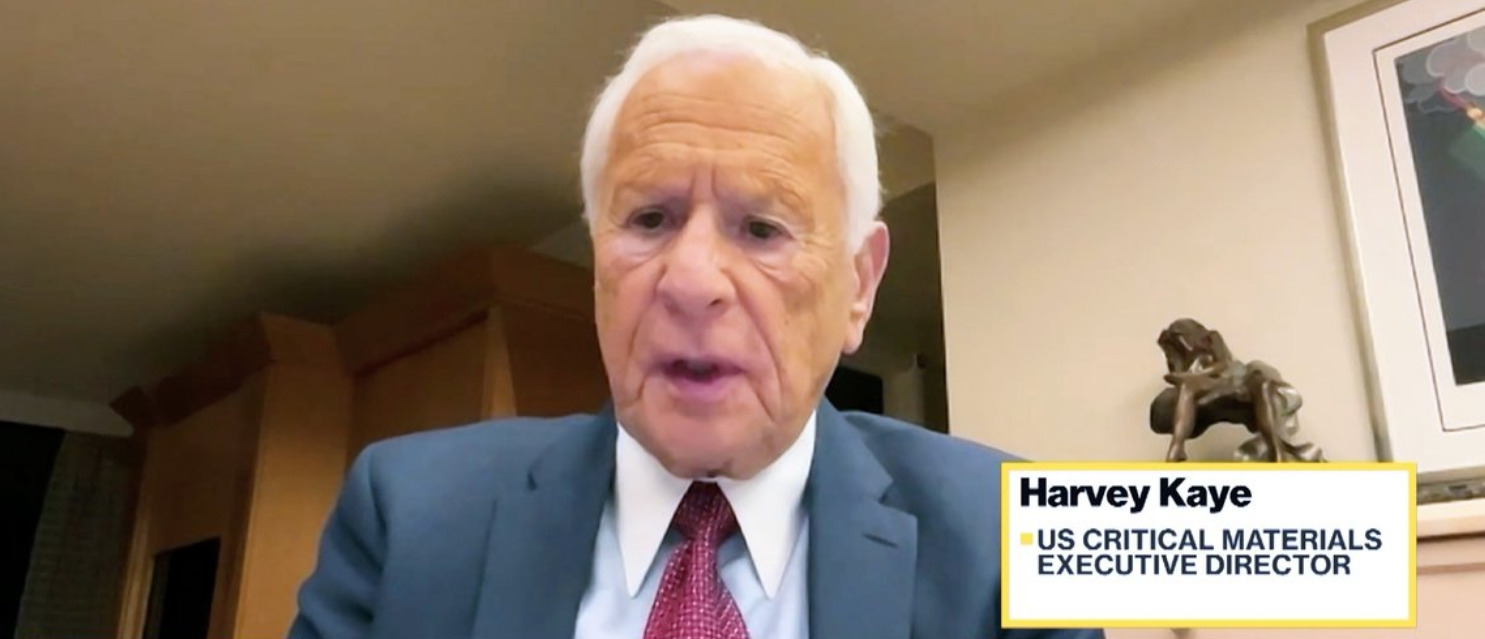
Harvey Kaye, Executive Director of US Critical Materials, provides further insight in a one-on-one interview with Ndubuisi Micheal Obineme, Managing Editor of The Energy Republic, on how the US is making significant strides in critical minerals production and processing in-country. Excerpts:
TER: Tell us about US Critical Materials Corp.
Harvey: US Critical Materials is a unique company. We own 334 claims on US Forest Service land, covering 11 square miles in Sheep Creek, Montana.
What is unique about this deposit, compared to many others, is that it contains adits. An adit is a horizontal tunnel drilled 30 – 40 years ago into the side of the mountain.
However, when the rare earth supply issue became apparent, particularly with the Chinese export restrictions, our geology team went inside those adits, approximately 450 feet. Within them, they encountered a solid wall resembling pink marble. The pink marble was identified as ancylite and monazite. It turned out that these were the host rocks of rare earth minerals.
The most interesting thing about the discovery is that they found 62 carbonatites. A carbonatite is a vertical intrusive body originating from deep underground and is commonly associated with rare earth mineralization.
Our geologists took samples of all these carbonatites and brought them to Activation Labs (Actlabs), a leading lab in North America for evaluating rare earths. They came back and said, “We have just discovered the richest deposits of rare earths known in North America.”
What makes our rare earth discovery unique is that it has 9% rare earth minerals, which is 90,000 parts per million, compared to Mountain Pass, which has 4%-5% rare earth, while most US deposits have 1% or less rare earth.
Importantly, we also have the heavy rare earth elements, including dysprosium, terbium, gadolinium, and yttrium. The heavy minerals are needed for military purposes, including magnets, chips, and all of that.
At US Critical Materials, we believe we represent the highest-grade, rich rare earths and critical minerals in the United States. This makes us different.
Talking about the geopolitical aspects of critical minerals, China has pursued a long-term strategic approach to critical minerals over the last 15-plus years. China uses the ‘Belt and Road’ initiative as its strategic and political plan. They travel around the world to source minerals, and Africa is a key example. China has controlled a significant portion of the global rare earth supply chain, particularly in processing, which has historically raised environmental concerns.
Recent U.S. policy shifts have recognized the risks of this dependence and the need for domestic capability.
We testified before the U.S. Congress regarding the rare earth minerals issue.
The Congress asked me what they can do to help companies domesticate US critical materials. The answer was very simple. We requested that the government help accelerate the permitting process for developing US critical minerals. It usually takes 15 years to bring critical minerals projects online.
So we requested that they help us with the permitting process, make it efficient, and cut the red tape, so that companies can bring the project online in three years, not fifteen years.
Secondly, we also needed economic incentives and an enabling market for companies that produce critical minerals.
To some extent, they have been able to do that.
Essentially, we will begin producing bulk extracts from Sheep Creek within the next six months. This isn’t the full production. This means that we will extract the minerals from the mountain before we start supplying them to the end users, such as magnet makers, etc.
On the processing side, we were introduced to Idaho National Labs a couple of years ago. Idaho National Labs is one of 17 national labs in the United States. We asked them if they could create an environmentally friendly technology that could process our minerals, just like what China is doing. This will give us the ability to compete with China.
We have entered into a collaboration with Idaho National Labs. They will use our ore because it is very high grade with low thorium. Rare earth deposits are most often found in conjunction with thorium, which is radioactive. If it’s up to 500 parts per million or more, it requires a nuclear regulatory authority to be able to process it. If it’s below the number, it reduces regulatory burden.
What we have is an average of 200 parts per million. This means that we are considered a geological unicorn. The reason we call it a geological unicorn is that it’s very rich in carbonatites, and it doesn’t require an open-pit mine, which isn’t good for the environment.
We extract the ore from Sheep Creek utilizing a form of underground extraction using controlled underground mining, similar to in-situ leaching. This is done inside the mine, which is like a gold mine, 5-15 feet wide. This allows selective removal of mineralized material while minimizing surface disruption.
It is very environmentally friendly and an added advantage to us.
Within a year, Idaho National Labs created a new cutting-edge technology. The technology is called an electrochemical membrane reactor. It’s US-made technology. This is now a proven technology on the lab scale and bench scale models. There will be a Patent filed in the near future.
We call this whole thing rock to dock. The reason it is significant is that it is taken from the rock that comes out of the ground, and we go through all of the steps. Those steps are micronization, comminution, beneficiation, distillation, separation, etc. The idea is to go from the rock to the finished product, where we can produce gallium, scandium, and samarium, and other critical minerals that the industry needs—along with the heavies.
This is what US Critical Materials is doing.
The world of rare earths and processing is very disjointed and confusing, with inconsistent claims and unclear capabilities. The government is trying to figure out who’s real and who’s not.
However, we have a different approach, which is the ‘integration and clearing house’ approach.
While we are developing this wonderful resource in Sheet Creek, we’re also building a new state of the art cutting edge processing technology with Idaho National Lab.
We have also been getting requests from various mining interests from around the world, particularly from countries that have rare earth minerals. These countries include Australia, Brazil, Burundi, the Democratic Republic of the Congo, Zambia, etc. These are the countries that have rare earths. The problem is that they can’t process the rare earth minerals except in China. They can’t sell the output, except in China.
We are working with multiple processing technologies, recognizing that no single method is optimal for all ore types. We are working with VerAI to apply artificial intelligence to ore characterization and processing optimization. The ore from every mine is different; it’s not all the same. But we can analyse the ore from wherever it comes from. As we are developing our own technology, we also have relationships with five other technologies, as no single technology can process all the minerals.
We are integrating the output from other mining operations from other countries and matching them up with the appropriate process, and then having our own people sell those end products to the users. This would replace the Chinese rare earth minerals.
If we can give them a real alternative, they will move to the United States for their rare earth processing.
We believe our integration strategy is working well. It also enables us to sell the end product, whether it’s to the government, a European chipmaker, or an American magnet maker.
With this strategy, we can order the minerals and process them here in the United States. We are working with the government on that aspect.
Some weeks ago, President Trump announced Project Vault. The United States will provide an economic floor for the production of critical minerals facilities. The US government wants to create a strategic stockpile of minerals, just like an oil well. This enables long-term demand certainty, financing structures, and domestic industrial scale-up.
We intend to supply minerals to strategic industries, contractors, etc.
TER: Can the United States catch up with China’s rare earth dominance? What makes Project Vault a formidable contender for the diversification of the global supply chain on critical minerals?
Harvey: Yes. With coordinated effort between government, industry, and capital markets, we believe the U.S. can build a competitive supply chain as we work together in making the United States and the free world become rare earth sovereign again. The American entrepreneurial spirit is very strong.
To that end, we have started signing agreements with various companies and are also doing the same thing with other rare earth processors in addition to our own processor.
We are currently working with a minerals processor in Texas that has successfully extracted rare earth elements from our ore.
If we have a domestic processor that is reliable, we will introduce it to the United States Department of War because they need it. They need the heavy rare earths to replace what they spend in Gaza, Ukraine, and what the military is doing right now in Iran.
The critical minerals commodity crisis has almost doubled the price of these minerals over the last 90 days. Unfortunately, the world needs the critical minerals for the economy.
As a domestic US supplier, our processor becomes priceless for fulfilling that need in terms of critical minerals processing in the United States. It is very important for the government and us in that context.
We will start processing rare earth minerals over the next few years in the United States. This includes domestic supplies, processing, and other minerals that come from other places. This would also achieve a domestic certification process here.
By putting all of these together and cooperating with other players in the space, I think five years is realistic.
TER: Is Project Vault an ‘American First’ policy or a ‘Multilateral’ system? What broader opportunities would it unlock for strategic partnerships?
Harvey: We are very focused on the public-private sector partnership. The INL partnership is a prime example, as we are their industrial partner.
Also, the United States government has now come up with a new strategy, and US Critical Materials is working closely with the government.
Before now, the government was giving out lots of money, and they could not do it strategically. But now the government has retreated and has put a process together that works.
We have a retired 4-star general as one of our key advisors. His name is General Stephenphen Townsend.
General Townsend, among other things, managed AFRICOM, which was the United States entire military presence in Africa.
He told me a story. When they first took over Africa, he asked his people to do a survey and determine who owned all the rare earth and critical mineral mines in Africa. They told him that most of the mines are owned by the Chinese.
General Townsend decided to put his intelligence unit on Africa’s critical minerals, and it turned out that the mines that weren’t owned by the Chinese were used as the frontline company for the Chinese in another country, which is 100% owned by China. This is not working out very well for Africa because when they came in through the ‘Belt and Road’ initiative, China promised the people that they were going to improve their land, hospitals, and feed the children. But they did none of that.
However, we are now working with the Democratic Republic of the Congo. They have a very rich Valley, which I think they call the Valley of Fire, where all the volcanoes erupted many years ago. They have very rich, rare earth minerals and heavy minerals.
We have established a joint venture with their mining interests, which enables them to ship the minerals to the US. It will be processed here in the United States.
Project Vault, at the moment, is not a public-private partnership situation. It’s a strategic initiative that the US government has launched to break China’s dominance on rare earth minerals.
Meanwhile, we are also pursuing multiple public-private partnerships, and are working with Wall Street and the capital markets to provide the financing necessary to do it.
We’re also working with Brazil and Australia on critical minerals. They have all the mines, and none of them wants to ship them to China.
TER: How will Project Vault impact the US markets and global supply chain?
Harvey: It will be extremely beneficial to both the domestic and global markets. Project Vault is creating a floor for the commodity price and the economic projections for critical minerals.
For example, some of these processing plants are going to take two or three years. But we’re building one now with INL, which will be ready in approximately one year. If you do the economics, it creates opportunities for the company to get a contract. This is what Project Vault offers. It provides financing if there’s a guaranteed source of supply. It could be bonds, bond resolution, direct investment from part of the government, or from the Exim Bank.
The Exim Bank is willing to finance projects from Australia. This is why Australia is willing to ship the minerals to the US, because it will be financed by EximBank and processed in the United States. The whole thing turns out to work that way, and it’s a very effective economic model.
TER: Which other countries will you secure supply for critical minerals?
Harvey: Basically, it will be sourced from Sheep Creek because our grades compare favorably to lower concentrations historically sourced elsewhere.
Secondly, we are currently in a substantial discussion with Brazil on the Yittrium mineral. It’s a very important element that the US government needs. We have Yittrium as well, including people who can process it.
Australia has a lot of red mud minerals. Red mud is the byproduct of the mining of bauxite for aluminium.
We have also signed a deal with one of the major universities in the United States, which has developed a proprietary process for processing red mud.
We are working with one of the largest aluminium providers in the world, and they have 72 sites of red mud in billions of tons. Gallium, which is needed desperately, can be processed out of the red mud.
What we got from China when we were getting the gallium rolled out was 50 parts per million. But Sheep Creek has 300 parts per million.
We will be able to process red mud, extract the gallium, extract the scandium, and start supplying it to the defense industry within a year. This is what makes US Critical Materials different and unique among all the companies that are in the business. Nobody is trying to put all the critical minerals together in a complete database, operating space, and an integrated plan so that the government can buy them.
TER: Which other African countries do you think could be a driving force for the US-Africa strategic partnership on critical minerals?
Harvey: We are holding meetings and putting agreements together with the industry stakeholders in the mining sector in Africa. They include gold miners, other things of that nature. It’s mutually beneficial.
The world needs what they have, and we understand that there are always political risks in various things. We will make sure there’s proper protection for them and us from any political disruptions. We’re moving along quite well.
TER: What other strategy can the US government adopt to strengthen its critical minerals ambition?
Harvey: I think that they’re doing it. The United States government is assisting in the organizing and permitting process. The Project Vault is also providing a basis for economic stability.
There’s also a number of executive orders, legislation, including the National Energy Act. The government has established the National Energy Council, working closely with the States to drive efficiency in the process. There are three steps: get the right permit, start extracting, process, and make the minerals available to the world. All of those assets are being worked upon, literally, as we speak.
TER: What’s your outlook on the evolution of the United States critical minerals? Where will it be in the next five years from now?
Harvey: We’re very bullish. If you look at the basic economic terms, there’s an unquenchable market for what is needed.
Innovation across everything is dependent upon an abundant supply of rare earth.
The next generation of AI chips requires Gallium from hard rocks.
Demand is driven by Innovation in AI, semiconductor manufacturing, science, medicine, space travel, defense systems, hypersonic missiles, the energy transition, etc. Heavy rare elements are essential to all these sectors.
The reason that companies are involved in such high valuations of critical minerals is not because of price-earnings ratios. This is an anticipation of the market opportunities and the projected earnings between three, four, or five years from today.
We are a privately owned company. But we are now in the process of moving towards becoming a publicly traded company later this year. This is what makes us different from others.
At US Critical Minerals, we have visibility into revenue in 2026. Very few Critical mineral projects can say that.
We think we’re in a very unique position, and the industry is in an infancy period.
We expect the next five years to represent a significant inflection point for U.S. critical minerals.