

United States (U.S.) Pushes Energy Partnership in Caribbean, Eyes Suriname’s Growing Oil Sector

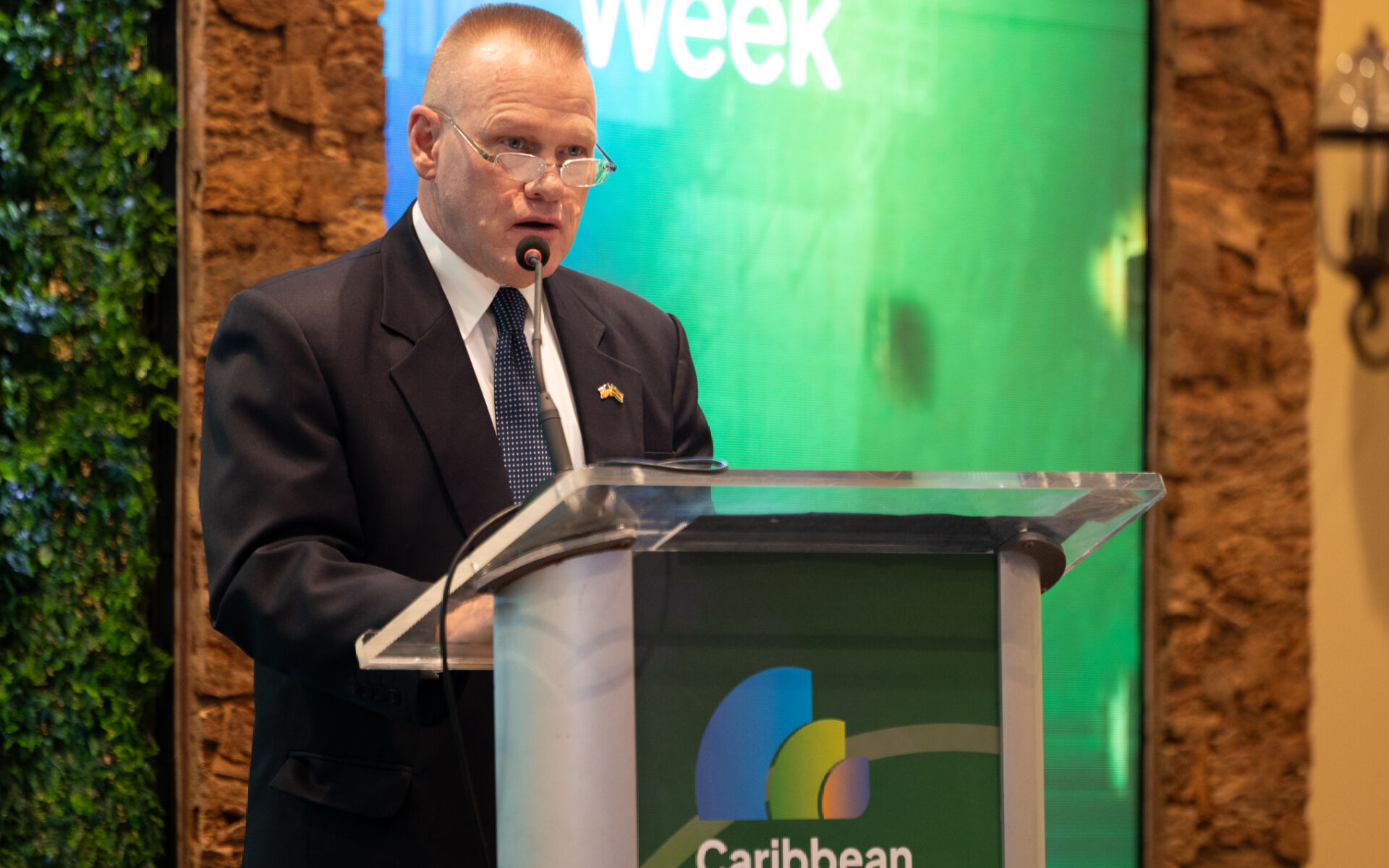

The United States is stepping up its push for deeper energy and infrastructure partnerships in the Caribbean, with a focus on Suriname’s emerging oil and gas sector and the region’s long-term energy security, according to Paul Watzlavick, Chargé d’Affaires at the U.S. Embassy in Paramaribo.
“It’s increasingly clear that this region is an essential partner to the U.S.,” Watzlavick said. “We want partnerships that support a strong workforce, keep our people safe and respect the sovereignty of every country.”
He stressed that energy security in the Caribbean goes beyond production, highlighting the need for modern infrastructure, updated technologies and stronger systems across power generation and transmission. “We need energy systems that are up to date. The needs here are very different from Trinidad or Texas, but the goal is the same,” Watzlavick said.
Framing the region within a broader geopolitical context, Watzlavick warned against reliance on external actors offering unsustainable financing. “The Western Hemisphere is our home – we are your neighbors. We want a neighborhood that is not manipulated by outside powers that do not share these goals,” he said.
“We have all seen what happens when contracts for power projects or pipelines come with unsustainable debt, opaque terms or technology that cannot be operated or is manipulated from far away. Our view is simple: energy and natural resources should strengthen the countries that own them. Extraction should not be a one-way street.”
Highlighting the role of U.S. companies, Watzlavick pointed to APA Corporation’s offshore exploration success in Suriname. “[APA] took a risk pioneering offshore exploration in Suriname, and now we’ll see the first oil in two years,” he said.
He added that U.S. firms can bring broader capabilities across the value chain. “Other U.S. companies can deliver modern refineries, manage complex systems… and there’s opportunity beyond that.”
Looking ahead, Watzlavick emphasized the importance of aligning investment with long-term development goals. “Today’s investments in Suriname and CARICOM should be focused not only on immediate needs, but on how we want this region to look 50 years from now,” he said.
“If we link American and Caribbean resources, combining reliable fossil energy with modern grids and infrastructure, we can power the entire region to a brighter future.”
Distributed by APO Group on behalf of Energy Capital&Power.