

Victor Tivane Launches New Book for Mozambique Local Content Development in Oil, Gas Sector


By Ndubuisi Micheal Obineme
The book reviews Mozambique’s oil and gas business opportunities, and demand for goods and services featuring exclusive insights on the current state of the country’s hydrocarbon resources coupled with recommendations to developing the natural resources for sustainable development.
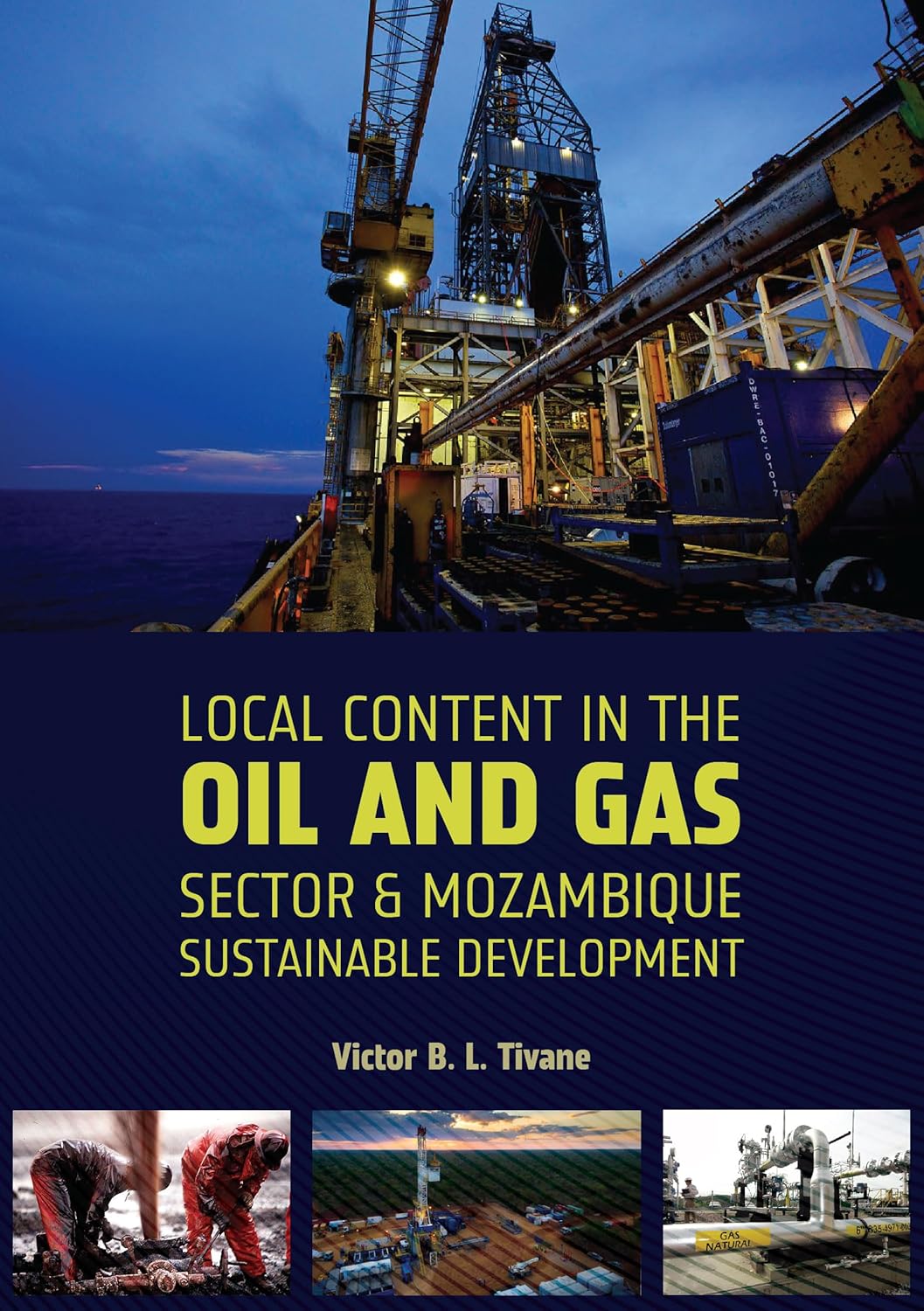
Victor Tivane, a geologist and ENH local content director, has announced the launch of a new book titled ‘Local Content in the Oil and Gas Sector & Sustainable Development of Mozambique’ – a Collection of the country’s hydrocarbon resources, opportunities, and local content development across the oil and gas value chain.
Tivane’s book features the current state of the Mozambique oil and gas industry. It also provides leadership advice to the government in creating the right policies to support local companies, increase local skills, and accelerate technology transfer for economic and sustainable development in Mozambique.
“A new opportunity is opening in Mozambique, leading to the discovery of large reserves of natural gas that needs to be properly managed,” Tivane said in an interview with The Energy Republic. “It is important to mention that the challenge for developing countries, such as Mozambique, is to create strategies to make the most of the exploitation of this important resource to benefit the growth of other sectors of the economy.”
According to Tivane, the book comprises 275 pages, with eight chapters covering:
I. Main National Objectives of Mozambique;
II. Hydrocarbon Geology, Exploration, Development and Production;
III. Principles of Hydrocarbon Management;
IV. The Hydrocarbons Sector in Mozambique;
V. Country’s Commitment to Local Content;
VI. Structure and Specificity of Local Content;
VII. Global Initiatives and Local Content Lessons; and
VIII. Local Content and the Roadmap for its Development.
“This book, I believe would provide the required tool that can expose the Mozambique oil and gas industry in such a way that in the next 30-50 years, the country could make a big difference if its oil and gas resources are managed with excellence.
“The content in the book also provides more insight into the risks that may arise, starting from political tensions, including economic and social instability if the resources aren’t managed efficiently.
“My book also features contributions on the strategies and business model that can be followed so that the extractive industry can contribute positively in leveraging other sectors of the economy while focusing on Local Content.
“The digital copy of the book has been published on Amazon. The hard copies will be published in November 2024,” he added.
To download the digital copy of the book, please visit the link below for details:
About the author
Victor B.L. Tivane was born on March 13, 1965, in Mozambique. He has a degree in geology from Eduardo Mondlane University (UEM) in Mozambique and a degree in business management from South Africa University (UNISA).
He also took various medium and short-term training courses given at Universities and Training Centres located in Europe (Dublin, Aberdeen, and London), the USA (Silicon Valley and Denver), Latin America (São Paulo, Rio de Janeiro, and Brasilia), Africa (Johannesburg, Cidade da Praia and Cairo) which led training in subjects ranging from the Local Content Development in the Oil and Gas Sector, Techniques for Attracting Investments, Schemmes for Training Small and Medium – size companies and Development of Industrial Parks. Still, it is also important to reveal his participation in several International Oil and Gas Forums, either as Speaker or participant.
His professional experience, which exceeds more than 15 years, includes the Promotion and the Development of Local Content in the Oil and Gas Sector, Development and Operationalization of initiatives to train Small and Medium-size companies and their connection with economic sectors (Linkages) as well as the Promotion of Foreign Direct Investment including Industrial Free Zones and Industrial Parks.