

France gaz calls for ‘multi-energy’ strategy as country faces high energy cost

By Ndubuisi Micheal Obineme
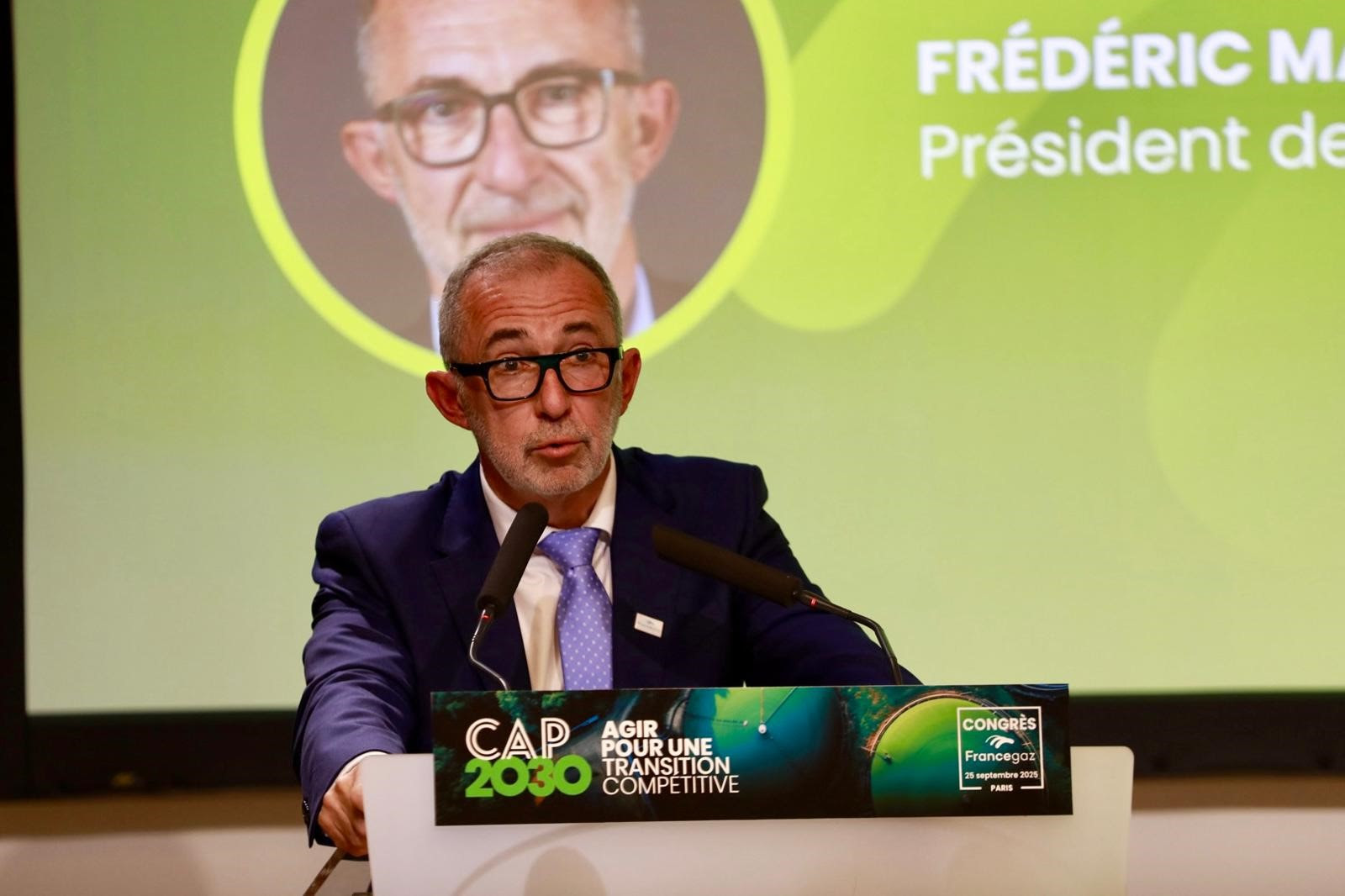
France must accelerate its energy transition while keeping multiple energy options open for industry, households and transport, France Gaz president Frédéric Martin has said, warning that the country cannot afford to sacrifice competitiveness or resilience in the pursuit of decarbonisation.
Speaking at a press conference in Paris, covered by The Energy Republic, France gaz president presented a report, produced by the association, which outlines two scenarios for the country’s energy future after more than nine months of consultation with network operators, industrial customers and key stakeholders.
The scenarios reflect a central argument of France gaz, which states that while France needs to reduce overall energy consumption and emissions, the transition should not be built around electricity alone.
Instead, France gaz is advocating for a combination of electricity, biomethane, hydrogen, synthetic gases, liquefied gases and other low-carbon molecules, supported by infrastructure capable of handling a diverse energy mix.
Two pathways on energy transition
France gaz’s first scenario emphasizes domestic resources. The objective is to maximise local energy production and reduce dependence on imported energy.
The second takes a more industrial approach, allowing for the possibility of importing green energy where this can contribute to the competitiveness of French industry. Martin said this could include energy combined with carbon capture and storage (CCS).
In addition, Martin stressed that France is experiencing a strained public finances, geopolitical uncertainty and pressure on the country’s industrial base, which makes the economics on energy transition more important as its environmental objectives.
He reiterated that France must return to a stronger production-oriented model and make better use of domestic resources while ensuring that energy policy supports a diverse energy mix, not undermining industrial activities.
Energy consumption still needs to fall
Notably, France gaz’s scenarios doesn’t envisage an increase in overall energy consumption.
Martin said France currently consumes around 1,607 TWh of energy, above the target of 1,200 TWh in the country’s national trajectory. Meeting emissions objectives will therefore require a substantial reduction in total energy use.
Also, France gaz predicts that gas demand will decline, reaching around 17% to 20%.
Commenting on the projection, Martin stressed that falling gas consumption does not mean gas will be removed from the French energy system.
In buildings, he said energy efficiency, lower heating demand and changes in consumer behaviour are driving the decline in consumption.
He also highlighted the emergence of hybrid systems, as customers combine gas and electricity usage based on market conditions and prices. That flexibility, he suggested, will become increasingly important as the electricity system faces changing patterns of demand.
Industry wants options, not a single pathway
Speaking further, Martin said the industrial sector presents a more complicated challenge, noting that industrial consumers wants to reduce emissions while remaining competitive. Their future energy mix, according to him, could include methane, biomethane, hydrogen, CCS and hybrid systems, depending on the industrial process and location.
He said that the difficulty on decarbonizing the industry is not simply a matter of replacing one fuel with another. However, changing the energy system can also require changes to production processes, making the transition more difficult and potentially slower. Local conditions also vary significantly, he added, strengthening the France gaz case on adoption of multiple technological options rather than a single solution.
Martin said French companies need several options to decarbonise without placing high costs on their operations, as smaller industrial companies, including subcontractors lacks the financial resources to make major investments in new infrastructure.
Gas infrastructure enters a new phase
France Gaz is also challenging the idea that declining gas consumption necessarily means gas infrastructure will no longer play a role in France’s energy system.
Martin cited recent reports from France’s energy regulator, the CRE, as evidence that gas infrastructure remains important to the French and European energy systems.
He pointed to gas-fired power generation being used during periods of high electricity demand this summer as an example of the role gas infrastructure can play in balancing the energy system.
The network itself, however, will have to adapt to lower volumes, he noted.
According to him, France gaz expects future tariff discussions to take account of changes in both the network and the volumes it transports.
He also said France gaz sees investment in more energy infrastructures to be completed by 2035.
Biomethane and hydrogen remain key bets
France Gaz says domestic renewable gases serves as an important part of the French energy mix.
In his words, Martin explained that France has substantial potential for biomethane and cited studies indicating that biomass availability should not necessarily constrain development.
He noted that hydrogen’s role will be focused on industrial applications.
He acknowledged the planned European infrastructure projects and additional public funding as evidence that hydrogen development is developing, with France potentially benefiting from its geographical position between Spain and Germany.
Furthermore, France gaz also wants greater recognition for LPG in France decarbonisation policy, particularly for rural areas and businesses without access to major electricity or gas networks.
He concluded that France cannot treat decarbonisation and resilience as competing objectives. However, the country will need to cut energy consumption, improve efficiency and increase electrification, while retaining a diverse range of energy sources and infrastructure capable of supporting industry and the economy.
“We will not be able to make the choice between decarbonisation and adaptation,” Martin said. “We will have to do both at the same time.”