
France set to become Europe’s hydrogen corridor as NaTran and Teréga project listed in European Projects of Common Interest

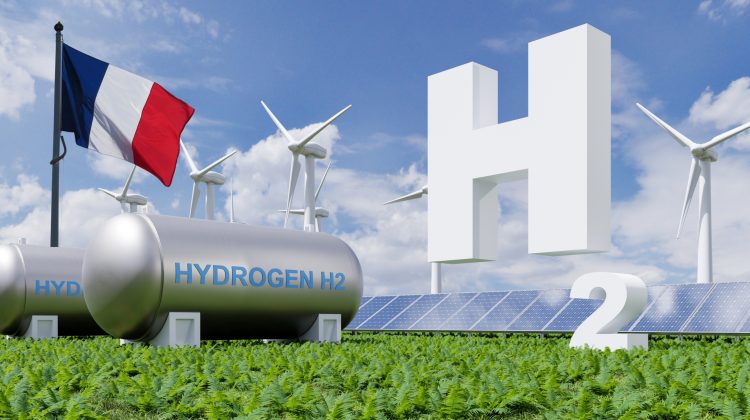
France is set to become Europe’s hydrogen corridor as NaTran and Teréga hydrogen infrastructure projects listed in the European Union’s Official Journal for Projects of Common Interest (PCIs), marking a historic turning point for French energy infrastructure.
The listing of NaTran and Teréga hydrogen infrastructure projects in the Official Journal of the European Union confirms that France will become the future continental hydrogen corridor in Europe.
This new list also features the status of key cross-border infrastructures, such as the Spanish backbone and the BarMar (Barcelona-Marseille) and CelZa (Celorico da Beira – Zamora) interconnections, components of the H2med corridor, while officially integrating several major French projects led by NaTran and Teréga into the European network.
The key projects listed on European Union’s Official Journal include:
● The HY-FEN project: this strategic national energy artery, nearly 1,000 km long and developed by NaTran, connects the Mediterranean (as a direct extension of the BarMar project) to the major consumption centers of northern and eastern France, opening the way to Germany. HY-FEN addresses the needs of our regions and transforms France into an essential energy bridge between the Iberian renewable hydrogen production basins, storage facilities, and European industrial centers.
● The MidHY project (led by NaTran), with a length of 200 km, constitutes an essential interconnection link to connect the regional HySoW network to the HY-FEN backbone.
● The HySoW ( Hydrogen South-West) project, led by Teréga, is establishing itself as a cornerstone of the Greater Southwest region and a key element of European energy sovereignty. Its 650-km+ transport network connects the production, import, and consumption areas of Southwest France to the European H2med corridor. This network is complemented by an underground hydrogen storage facility with a capacity of 500 GWh gross calorific value (GCV), ensuring system flexibility, securing supply, and absorbing fluctuations in hydrogen production and demand.
● The MosaHyc, RHYn, Hy4Link projects and the Franco-Belgian corridor supported by NaTran linking HY-FEN to the industrial basins of Eastern France and Central Europe (Germany, Luxembourg, Belgium).
The inclusion of this hydrogen project on European Projects of Common Interest provides NaTran and Teréga with powerful operational levers to successfully implement these large-scale projects.
The projects listed on EU’s Projects of Common Interest will get:
● Simplified procedures: These projects benefit from priority access and accelerated processing for obtaining administrative authorizations, an essential condition for meeting the tight deadlines of the energy transition.
● Eligibility for European funding (CEF): this status opens up the possibility of applying for crucial financial aid via the Connecting Europe Facility, enabling industrial investments to be catalyzed.
● A long-term guarantee: this labeling offers increased market visibility and a strong signal of confidence, essential for engaging industrial players in the hydrogen sector.
This official publication follows the adoption by the European Parliament and the Council of the list proposed in December 2025 by the European Commission, in accordance with the regulation on trans-European energy networks (TEN-E).