
H2med hydrogen project: BarMar submarine pipeline advances to FEED phase

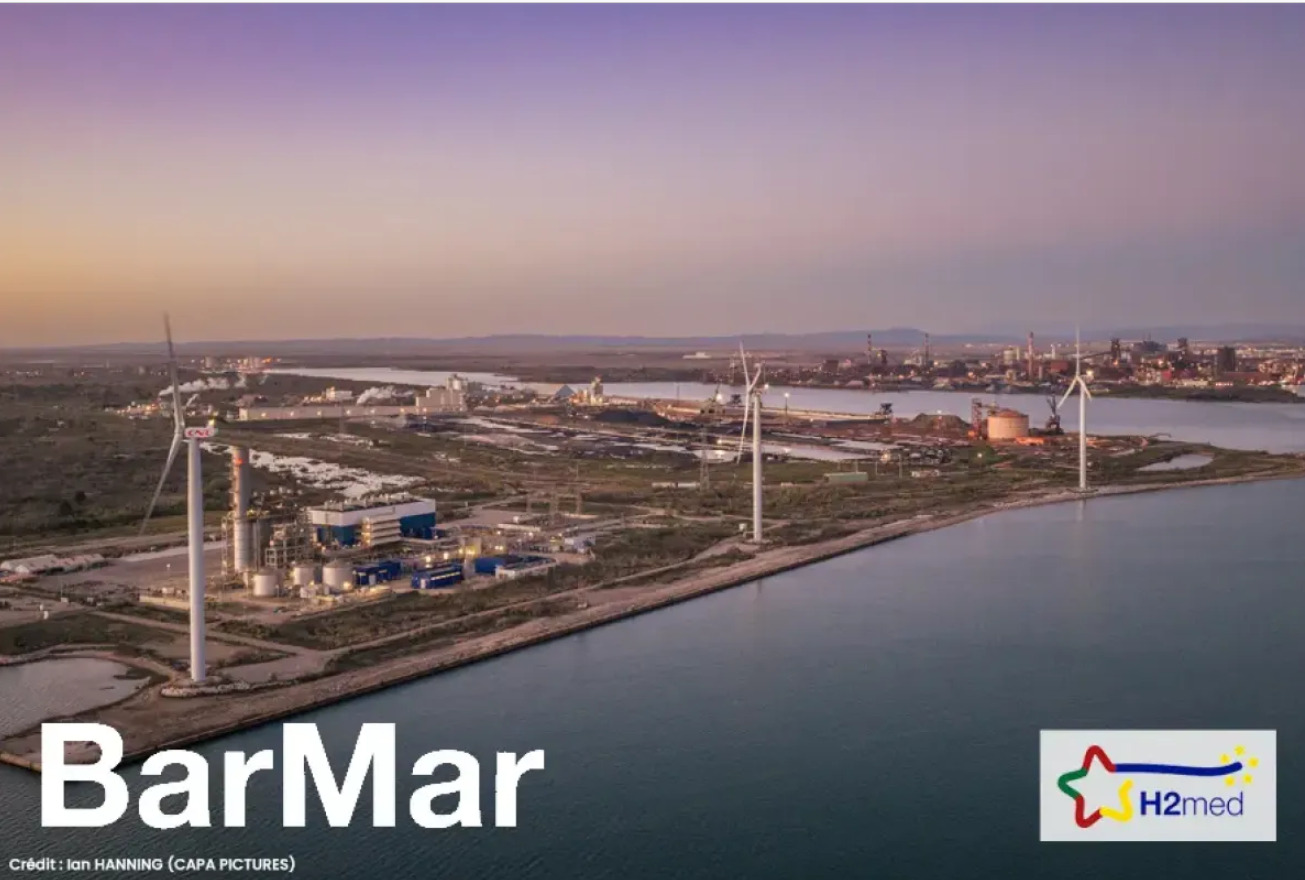
…marking key milestone for Europe’s first major low-carbon hydrogen corridor.
The H2med consortium has officially announced that the BarMar subsea pipeline project has officially entered its Front-End Engineering Design (FEED) phase, following the successful completion of pre-FEED studies. The milestone represents a critical step in the development of the European Union’s first major low-carbon hydrogen corridor, which will connect Barcelona to Marseille via subsea pipeline.
From Feasibility to Detailed Design
The completion of BarMar’s pre-FEED phase confirmed the overall technical viability of the project, along with the design basis for its compression station and pipeline. A corridor route has also been defined, informed by initial findings from the ongoing environmental impact assessment.
The transition to FEED marks a significant shift from preliminary design toward finalizing the project’s technical architecture. This phase will incorporate findings from environmental and technical studies, as well as feedback gathered during public consultations held in France and Spain, which concluded in July 2026. In France, consultation guarantors are expected to publish a summary report by mid-August, including recommendations for project developers to consider.
During the FEED phase, work will focus on:
- Confirming the pipeline design and final route
- Finalizing the compression station configuration
- Preparing regulatory authorization application files
- Defining technical specifications for construction preparation and material procurement
Following FEED, the consortium will award the engineering design contract and launch detailed subsea surveys. The resulting technical basis will support partners and investors in reaching a Final Investment Decision (FID) for BarMar ahead of construction, with commercial commissioning (COD) targeted for 2032.
EU Funding Supports Engineering and Environmental Studies
Building on the more than €35 million in funding awarded to H2med corridor projects by the European Commission in January 2025 under the Connecting Europe Facility (CEF), the H2med-BarMar project has received over €28 million. This funding, combined with investment from project promoters, is enabling partners to finance engineering studies, underwater and environmental surveys, and the full scope of work required for environmental impact assessments and permitting.
“We are moving from feasibility studies to concrete industrial modeling, a key step to support Europe’s decarbonisation goals,” said Francisco de la Flor, CEO of BarMar. “Designated as a Project of Common Interest (PCI) and energy highway by the European Commission, H2med aims for commissioning by 2032, subject to all regulatory conditions being met throughout the H2med corridor.”
Strong Political Momentum Behind the H2med Corridor
The technical progress coincides with growing political support for the project. On July 6, energy ministers from Portugal, France, and Spain met in Paris alongside European Commissioner for Energy Dan Jørgensen, regulators, and operators as part of the High-Level Group on South-West Europe, to strengthen cooperation and align on the strategic deployment of energy interconnections.
Notably, Germany participated in the regional group for the first time, underscoring the broadening momentum behind European energy interconnections — particularly the H2med corridor.
About H2med
H2med is a consortium of energy infrastructure operators developing the European Union’s first major low-carbon hydrogen corridor, connecting the Iberian Peninsula to France and, ultimately, Central Europe. Recognized as a Project of Common Interest (PCI) and energy highway by the European Commission, the corridor includes the BarMar subsea pipeline linking Barcelona and Marseille.