
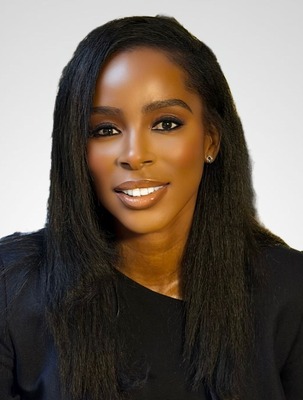
“We are creating viable renewable energy ecosystems across Africa” – Otubu, SEforALL’s Senior Director

Renewable energy is increasingly being recognised as one of the most important factors for clean energy. Africa holds one of the world’s largest conventional and renewable energy resources, but it is still struggling with energy poverty. Nearly 600 million people across Africa still live without electricity, hundreds of millions more contend with unreliable power supplies, and close to one billion people lack access to clean cooking solutions. This persistent energy deficit continues to constrain industrial development, healthcare delivery, education, food security and broader economic growth, even as global investment in renewable energy accelerates.
In this interview, Anita Otubu, Senior Director, Sustainable Energy for All (SEforALL) talks to Genevieve Aningo, Senior Correspondent, The Energy Republic, outlining the organisation’s strategy to unlock Africa’s renewable energy potential, as well as bridge the energy access gap, coupled with the growing role of mini-grids in rural electrification, the policy and investment priorities needed to unlock the continent’s vast renewable energy potential.
She also shares SEforALL’s outlook for Africa’s renewable energy growth and explains how innovative financing and strategic partnerships will shape the next phase of sustainable energy development across the continent. Excerpts:
TER: Africa holds the world’s largest untapped renewable energy resources, but still struggles with energy poverty. What is SEforALL doing in Africa to bridge the energy access gap, and which African countries are playing a pivotal role in driving the organization’s deliverables on clean energy development?
Otubu: Despite holding the world’s largest renewable energy potential, nearly 600 million Africans still lack access to electricity, and hundreds of millions more experience an unreliable power grid supply.
Additionally, roughly one billion people lack access to clean cooking solutions.
SEforALL exists precisely to close that gap by mobilising ambition, policy frameworks, finance, and technical know-how towards addressing the challenge at scale.
SEforALL works across Africa to accelerate universal access to affordable, reliable, and sustainable energy through policy support, technical assistance, market activation, and blended finance mechanisms. An example of this effort is the Universal Energy Facility (UEF), a results-based financing mechanism that provides catalytic grants to accelerate the deployment of distributed renewable energy solutions, such as mini-grids, standalone solar for productive use, and clean cooking technologies.
Since 2020, the UEF has allocated over USD 74 million to energy access projects across Africa, benefiting more than 65,000 people, powering nearly 4,000 businesses and institutions including health and education facilities, and deploying over 6.7MW of solar PV capacity.
Our priority markets span Sub-Saharan Africa, particularly Western and Eastern Africa, where the lack of energy access is most concentrated.
Across all markets, SEforALL’s approach focuses on creating commercially viable renewable energy ecosystems by combining public, private and philanthropic capital, strengthening local institutions, improving regulatory
frameworks and ensuring that energy access delivers measurable socio-economic impact for communities.
In Nigeria, over $10 million USD was disbursed to 29 project developers to deploy clean energy solutions. Unlike typical household electricity connections, these deployments consist of high-capacity stand-alone solar and battery storage systems that power businesses, institutions and productive-use activities, enabling income generation, reducing reliance on diesel generators and supporting local economic growth.
Over 37,000 livelihoods were impacted positively, with over 3,000 tons of CO₂ emissions avoided annually.
Powering Social Infrastructure is our dedicated programme that ensures schools and health facilities have access to reliable, sustainable electricity. SEforALL conducts comprehensive assessments of the energy needs of the health and education sectors at the country level, then provides governments and financial partners with a clear strategy and roadmap to support the electrification of social infrastructure.
Following the assessments conducted in Nigeria, Rwanda and Sierra Leone, SEforALL developed forward-looking roadmaps with short-term, actionable recommendations for the public sector, development partners and the private sector — aimed at overcoming barriers to accelerating deployment of sustainable power solutions for schools and health facilities.
SEforALL is a co-champion of Mission 300, an ambitious initiative by the World Bank and the African Development Bank that aims to halve the number of people living without electricity in Sub-Saharan Africa.
In our role as the Secretariat for Mission 300, SEforALL views this as a mechanism not just for direct beneficiaries but for catalyzing clean energy markets, with price discovery gains and business models that can scale far beyond the 300 million direct beneficiaries.
TER: SEforALL has launched the SOGREA initiative to accelerate mini-grids development in rural communities in Sierra Leone. Could you highlight the number of communities this project will impact?
Otubu: The Salone Off-Grid Renewable Energy Acceleration (SOGREA) initiative represents one of the most comprehensive off-grid energy programmes currently underway in West Africa.
Sierra Leone has an electrification rate of just 36% of the total population, with meaningful grid access effectively concentrated in Freetown. Rural communities have long been left behind due to the prohibitive cost of grid extension infrastructure.
SOGREA is funded by the European Union and Denmark, and implemented by UNOPS and its hosted entity SEforALL, in close partnership with the Government of Sierra Leone.
SOGREA provides partial financial support to private sector developers to cover a portion of the upfront costs of developing new mini-grids and upgrading existing assets.
Under the SOGREA Investment Support Window, we are targeting the deployment of about 100 new mini-grids and capacity expansion of existing assets by 2028. This ongoing initiative will deliver over 25,000 new or improved electricity connections at affordable tariff levels, directly serving rural households, schools, health facilities, small businesses and communities where the absence of electricity has long been a barrier to education, healthcare and economic development.
TER: How is the project going to change the structural weaknesses in transmission, distribution, and grid stability in Sierra Leone?
Otubu: Sierra Leone’s grid is heavily concentrated in Freetown, with limited rural extension and frequent reliability challenges.
The SOGREA initiative addresses these structural weaknesses by bypassing the limitations and higher cost of centralized grid expansion and instead deploying decentralized mini-grid systems. The mini-grids reduce dependence on costly transmission infrastructure, provide reliable power directly to communities, and strengthen local governance of energy systems.
By catalyzing private investment and introducing results-based financing, SOGREA also builds market confidence, ensuring that distributed renewable energy becomes a sustainable complement to national grid development.
More importantly, SOGREA also targets institutional strengthening alongside physical deployment. Working with the Government of Sierra Leone, the initiative supports improvements to the energy sector’s regulatory environment, building the capacity and clarity that private investors need, such as bankable offtake frameworks, transparent licensing conditions and predictable tariff structures.
TER: Are you seeing a stronger need to develop more mini-grids rather than large utility-scale solar projects in Africa?
Otubu: There is no single solution that fits all of Africa’s energy access challenges — the most appropriate technology depends on population density, geography, demand profiles and the state of existing infrastructure. That said, for reaching the rural and peri-urban communities where energy poverty is most acute, distributed renewable energy systems, including mini-grids and standalone solar, offer the most practical and cost-effective pathways available today.
Utility-scale solar projects play an important role in strengthening national grids and lowering electricity costs in urban markets, and we fully support their development. But for dispersed rural populations, building out the transmission infrastructure to deliver power from a centralized generation asset is often expensive, and it takes many years to deliver the project.
A mini-grid can be deployed in a matter of months. It is scalable as electricity demand grows, and when properly structured, it supports productive use of energy in agriculture, healthcare, and small businesses
and industries.
SOGREA’s focus on mini-grid deployment reflects a deliberate strategy of meeting communities where they are, rather than waiting for grid extensions that may not arrive within the next decade.
TER: Notably, SEforALL has also launched the #EmPower Clean Energy campaign across Africa. How would this initiative bridge the energy access gap?
Otubu: SEforALL’s #EmPower Clean Energy campaign is grounded in a fundamental insight: access to electricity is not simply about having a connection; it is about having clean, reliable, sufficient power throughout the full day and night. For millions of Africans with a nominal connection who receive electricity for only a few hours, the transformative potential of energy access is severely limited.
The campaign draws attention to the quality gap as much as the access gap. A healthcare facility that can only refrigerate vaccines during daylight hours and a school that cannot provide a safe learning environment in the evening are real consequences of intermittent supply.
The 24-hour framing, during our Clean Energy Day activities, made those consequences visible, measurable, and politically urgent. The campaign is also shifting how governments, donors, and investors define and measure success. It directly reinforces our programme work: when we finance mini-grids through SOGREA or other programmes, we are financing systems designed to deliver consistent power, not just a nominal connection that delivers electricity only for part of the day.
The campaign also highlights the importance of productive use by integrating energy access with agriculture, cooling and clean cooking. These applications require a reliable supply throughout the day to be commercially viable and genuinely transformative for livelihoods, making 24-hour reliability not just a quality-of-life issue but a development imperative.
TER: Looking ahead, where does SEforALL see the biggest opportunities for renewable energy in Africa, and what should the government do to attract more investments, including strategic partnerships with the public and private sector?
Otubu: The opportunity in Africa is immense and accelerating. Falling costs for solar PV and battery storage have fundamentally changed the economics of distributed renewable energy.
Today, mini-grids and standalone solar systems can deliver electricity at costs that are competitive with diesel generation and, in many contexts, competitive with grid extension, thus opening markets that were previously considered economically marginal.
Many of the biggest opportunities lie at the intersection of energy access and productive use, such as agriculture, cold chain logistics, clean cooking, and health services, to name a few. These sectors generate the anchor demand that makes mini-grids commercially viable and drives stronger system utilisation.
In SOGREA, for example, we are actively working to integrate productive use alongside basic household connections, because that is what makes the business case durable and the development impact lasting.
To accelerate deployments, a public-private partnership at scale is required. Governments should focus on providing regulatory clarity for developers and investors expecting stable licensing frameworks, clear tariff guidelines, and transparent permitting processes.
Blended finance instruments like the results-based financing models SEforALL deployed through the UEF help de-risk private investment and demonstrate viable business models to commercial lenders.
Governments can also support demand aggregation, connecting anchor customers such as schools, health posts and agro-processing facilities to underpin mini-grid business cases.
TER: Africa is signalling a major resurgence in solar energy growth across the continent, with 23GW of new solar installations expected between 2025 and 2028. What is the SEforAll investment plan in Africa in 2026 and beyond?
Otubu: 2026 is a pivotal year for SEforALL’s work in Africa, and the momentum behind distributed renewable energy has never been stronger.
Africa’s projected 23 GW of new solar installations between 2025 and 2028 is an encouraging signal, but achieving universal energy access requires that growth to reach rural and underserved communities as well. This is precisely where SEforALL’s investment and catalytic work is focused.
In Sierra Leone, SOGREA is entering its most active deployment phase. Over €25 million in catalytic investment will be available to private mini-grid developers through 2028, with a parallel stream of up to 3,000 electric cookstoves being deployed in the same period to support a country that still relies heavily on firewood and charcoal for cooking.
Beyond financing, SEforALL continues supporting governments with technical assistance, integrated energy planning, policy reforms and market development to ensure long-term sustainability and scalability of renewable energy investments.
Overall, SEforALL sees Africa’s projected renewable energy growth as a major opportunity to accelerate universal energy access while supporting economic growth, climate resilience, energy security and long-term sustainable development across the continent.
SEforALL is advancing the development of markets and the investor confidence that will drive sustained energy access investment across Africa well beyond the lifetime of any single programme.