

“We are developing two major CO₂ projects to decarbonize cement and steel industries” – Mazzenga

Heavy industries such as steel and cement produce more than 15% of global emissions. Decarbonizing these sectors remains a major challenge, as electrification and renewable energy alone cannot eliminate the emissions. But carbon capture, utilization and storage (CCUS) will be essential to achieving carbon neutrality.
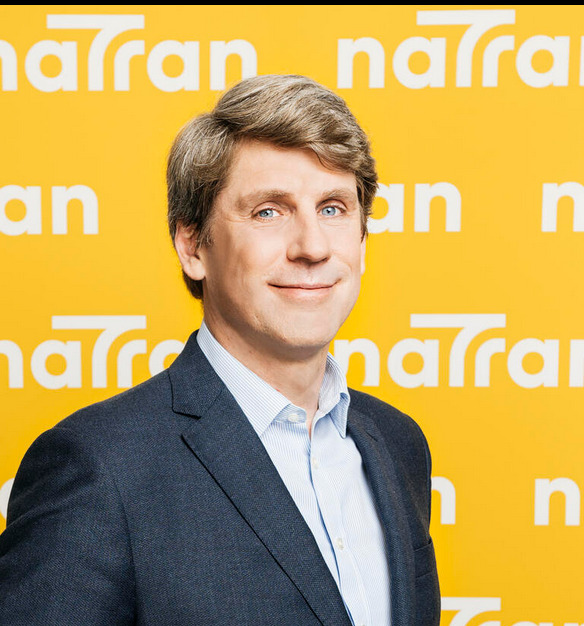
In this interview, Anthony Mazzenga, Director of Development at NaTran (the main gas transport operator in France and 2nd largest in Europe), talks to Ndubuisi Micheal Obineme, Managing Editor of The Energy Republic, about the company’s CO₂ projects in France, highlighting the project potential on decarbonization, particularly for the cement and steel industries, as well as the challenges surrounding CCUS projects in France. Excerpts:
TER: What major CO₂ infrastructure projects is NaTran currently developing in France, and how important are they for French industry?
Mazzenga: CCUS is essential across many sectors. For cement, steel, and chemicals, it’s the only way to reach carbon neutrality, since these sectors are difficult or even impossible to electrify.
We’re currently developing two major CO₂ projects in France. The first, called GOCO2, is in western France, near the port of Nantes–Saint-Nazaire, and connects two cement producers, Lafarge and Heidelberg Materials.
The project covers more than 300 km of steel pipeline to carry CO₂ from the emitters to a SAF producer at the port and a CO₂ shipping terminal. The pipeline will be able to transport more than two million tonnes of CO₂ per year.
The second CO₂ project, DKHARBO, is located in the Harbour of Dunkirk and connects to aluminum, steel, and cement producers. It’s a strong industrial harbour in France, and those emitters want to store their CO2 in geological storage in the North Sea.
We are in partnership with Equinor, a Norwegian oil and gas player, to develop the whole value chain.
Natran is developing the onshore pipeline, and Equinor will develop the offshore pipeline and the storage. Other routes are also considered to offer choice for the emitters.
TER: What are the barriers to CCUS in France?
Mazzenga: Technically, everything is in place, but there’s still an economic gap in pricing. At present, CCUS isn’t economically viable because abatement cost is higher than the price of CO₂ under the EU ETS.
Some subsidies are needed for the prime movers, and the main challenge right now is the way subsidies are structured, especially when they’re awarded on an individual, emitter-by-emitter basis through competitive processes.
A more systemic approach to subsidies would help us meet the economic conditions to reach the FIDs of each link of the CCUS value chain simultaneously.
We’re still in the development stage, but we believe the conditions for a final investment decision will eventually be in place.
TER: Can existing natural gas infrastructure be repurposed for CO2 transport?
Mazzenga: We can repurpose the natural gas pipeline, but the existing pipelines in the area we’re currently developing are needed to supply gas to France.
We don’t expect the pipelines to be used for CO₂ transport in the long term.
In other areas, repurposing pipelines to transport CO₂ may be an option. It is technically feasible and economically interesting.
TER: What investment is required to develop a competitive CO2 transport network in France, and how can industry collaboration make it work?
Mazzenga: We’re already working in partnership on CO2 and decarbonization.
On our own, we don’t have the capacity to build the entire value chain. That’s why working with the key players is essential to developing it.
Once the first value chains are in place, we can take a more commercial approach to extend the number of emitters and users connected to those first chains and develop new ones in other areas.
TER: How important is European coordination in developing a connected CO2 infrastructure?
Mazzenga: A highly interconnected CO2 infrastructure across Europe is not as obvious as for electricity and gas.
CO2 is a waste and has limited industrial uses, different from energy markets, where the benefits of interconnection are clear. There will be some connections in certain areas.
We’re currently working with Fluxys, our Belgian counterpart, to assess the feasibility of a joint project between France and Belgium.
We could take a similar approach elsewhere, focused on regional cooperation rather than building a broad, interconnected CO2 network across Europe.
TER: What steps does France need to fully operationalize CO₂ transport system?
Mazzenga: For now, the main challenge is economic.
The economic situation is difficult in France, as it is elsewhere in Europe. CO2 prices and regulations are not yet strong enough to encourage private-sector investment.
Our priority is to keep developing the project, reduce uncertainties and risks, and ensure we’re in the best possible position to reach a final investment decision (FID).
Ultimately, the FID will depend on how the industry’s economic situation develops over the next few years.