

SNG Managing Director, Ralph Gbobo Calls for Africa-Centred Energy Transition, Urges Investment in Gas Infrastructure to Unlock Industrial Growth

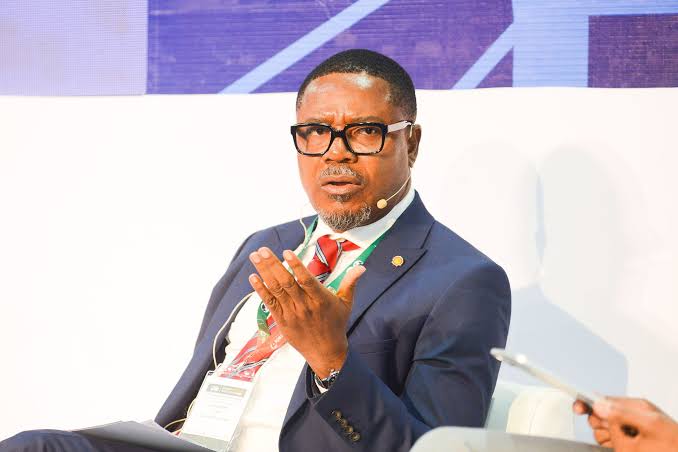
… says transition-ready gas infrastructure is key to Africa’s industrial growth and energy security.
By Ndubuisi Micheal Obineme
As Africa seeks to close its energy access gap and accelerate industrialization, Ralph Gbobo, Managing Director of Shell Nigeria Gas (SNG), says the continent’s midstream gas infrastructure will be critical to turning abundant energy resources into reliable power, industrial growth and economic value.
Speaking at the 2026 Africa Oil Week (AOW) Conference, Gbobo said Africa must prioritize energy access, industrialization and energy security while ensuring that the infrastructure being developed today can support lower-carbon energy solutions.
He stressed that Africa should resist the temptation to replicate energy-transition pathways developed in other regions, arguing instead for an approach grounded in the continent’s unique energy realities.
While responding to questions on Africa’s readiness to adapt its midstream infrastructure for emerging energy solutions, including hydrogen, biomethane and carbon capture. He said, “The more important question is not how ready Africa’s midstream infrastructure is for hydrogen, biomethane and carbon capture transportation today, but whether those technologies are currently the highest priority for Africa’s energy system.”
With more than 600 million Africans still lacking access to electricity and many industries facing persistent energy reliability challenges, he reiterated that the immediate priority for most African countries should remain the development of gas infrastructures capable of supporting economic growth, industrialization and energy security.
However, he said this focus should not come at the expense of future energy-transition opportunities.
“The infrastructure we build today should be transition-ready,” he explained, stressing that pipelines, processing facilities and distribution networks should be designed with sufficient flexibility to accommodate lower-carbon molecules and carbon-management solutions where commercially viable.
In his words, he acknowledged that biomethane could leverage existing gas infrastructure, while hydrogen would require more extensive infrastructure adaptation, including the creation of sufficient demand.
Meanwhile, carbon capture, according to him, would depend significantly on supportive policies, commercial incentives and access to suitable storage opportunities.
“If we define readiness as having the infrastructure, regulatory framework and commercial ecosystems needed for large-scale deployment, I will say Africa is probably less than one-quarter ready today,” Gbobo disclosed. “However, I believe that is the wrong scorecard. The real opportunity is ensuring the gas infrastructure we are building today is capable of supporting tomorrow’s energy transition.”
Turning stranded gas into economic value
Addressing the challenge of stranded gas across Africa, Gbobo said the economic consequences extend well beyond the value of the gas resource itself.
“When gas remains stranded, it is not only the resource that is stranded. The jobs, investment, industrial growth and economic value it could create are also stranded,” he stated.
Stranded gas creates a significant opportunity cost for African economies, including lost government revenues, higher energy costs for industries and missed opportunities for employment and local value creation. Gas that could support power generation, fertilizer production, petrochemicals and manufacturing can remain unused or, in some cases, be flared.
Gbobo argued that the challenge is frequently one of demand viability and infrastructure connectivity rather than resource availability.
He reiterated that Africa needs to develop its gas value chain as an integrated system that connects gas fields to processing facilities, transmission pipelines, distribution networks and viable demand centers.
He said one approach is by creating sufficient demand through industrial clusters, noting that this aggregates multiple manufacturers to provide the scale required to justify infrastructure investment while improving industrial competitiveness.
Another approach, he highlighted, is to locate industrial clusters close to gas fields, reliable gas infrastructure or anchor customers.
Where demand already exists away from gas-producing regions, he stated that governments and industries must pursue ambitious midstream infrastructure projects capable of connecting gas-rich areas with neighboring markets facing energy shortages.
Examples include Nigeria’s Escravos–Lagos Pipeline System (ELPS) and Ajaokuta–Kaduna–Kano (AKK) pipeline, as well as the West African Gas Pipeline (WAGP).
“Ultimately, the objective is not simply to produce more gas, but to build the midstream backbone that converts Africa’s gas resources into energy security, industrialization and sustainable economic prosperity,” he explained.
Policy incentives critical to unlocking investment
On policy and incentives, Gbobo highlighted the role of government policy in attracting investment into Africa’s midstream infrastructure, noting that Nigeria has introduced several measures in recent years to stimulate investments across the energy value chain.
Among the measures highlighted were the Midstream and Downstream Gas Infrastructure Fund (MDGIF) established under the Petroleum Industry Act, tax credits for non-associated gas greenfield development, midstream capital and gas utilization investment allowances, incentives for deep offshore oil and gas projects, zero import duty on qualifying gas equipment, and VAT relief for feedgas and compressed natural gas.
The MDGIF, in particular, provides government equity support to de-risking strategic midstream and downstream gas infrastructure projects and attracting private capital.
Across Africa, similar fiscal and financing mechanisms exist, although their design and application vary from country to country.
Speaking further, Gbobo underscored the need for African countries to provide more incentives to improve project economics, reduce investment risk and provide confidence that regulatory conditions will remain stable.
Three areas were identified as particularly important.
First, Gbobo noted that fiscal incentives must improve project viability, through measures such as targeted tax relief, accelerated capital allowances, duty exemptions and viability-gap funding for infrastructure serving emerging or remote markets.
Second, he noted that regulatory certainty is essential. Investors need transparent tariffs, predictable licensing arrangements, open-access rules and protection against arbitrary policy changes.
Third, he added that policy must address demand and payment risk. Governments can help by supporting credible anchor customers, payment-security mechanisms and public-private partnerships that provide predictable throughput for infrastructure projects.
More so, Gbobo also pointed to the potential of regional trade frameworks to expand intra-African gas markets by connecting gas-producing countries with underserved neighboring markets through shared infrastructure, preferential tariffs and effective transit arrangements.
“Good policy should not permanently subsidize uneconomic infrastructure,” the Gbobo said. “It should remove the barriers that prevent viable projects from taking off and give private capital the confidence to connect Africa’s gas resources to the people, industries and regions that need them most.”
An African pathway to energy transition
Gbobo called for an African energy transition that recognizes the continent’s development priorities while maintaining a pathway toward lower-carbon energy.
“Africa should avoid the mistake of trying to replicate the energy transition pathways of other regions.
“Our transition must be anchored in Africa’s realities: expanding energy access, enabling industrialization, and building infrastructure that can evolve to support lower-carbon energy solutions,” he added.
Shell Nigeria Gas Limited (SNG) was established in 1998 as a wholly owned Shell company. The company operates across eastern and western Nigeria, serving customers in Abia, Rivers, and Ogun States, with ongoing expansion into Bayelsa State and other locations. SNG delivers natural gas through a distribution network spanning approximately 150 kilometres of pipeline infrastructure.